
For decades, the South African industrial sector has managed safety by looking in the rearview mirror. We rely heavily on “Lagging Indicators”—metrics like Total Recordable Incident Rates (TRIR) or lost-time injuries.
While these metrics are important for compliance, they share one fatal flaw: they only measure an accident after the damage is already done.
Modern Occupational Health and Safety (OHS) requires a fundamental shift in data architecture. To protect a workforce effectively, Safety Heads must pivot toward Leading Indicators—leveraging real-time data to predict exactly where the next accident will occur, long before a worker is ever in harm’s way.
Turning PPE into Data Nodes
The transition to predictive safety begins by changing how we view protective equipment. A modern hard hat or high-vis vest must be treated as a network sensor, not just a static physical shield.
The Power of Continuous Telemetry
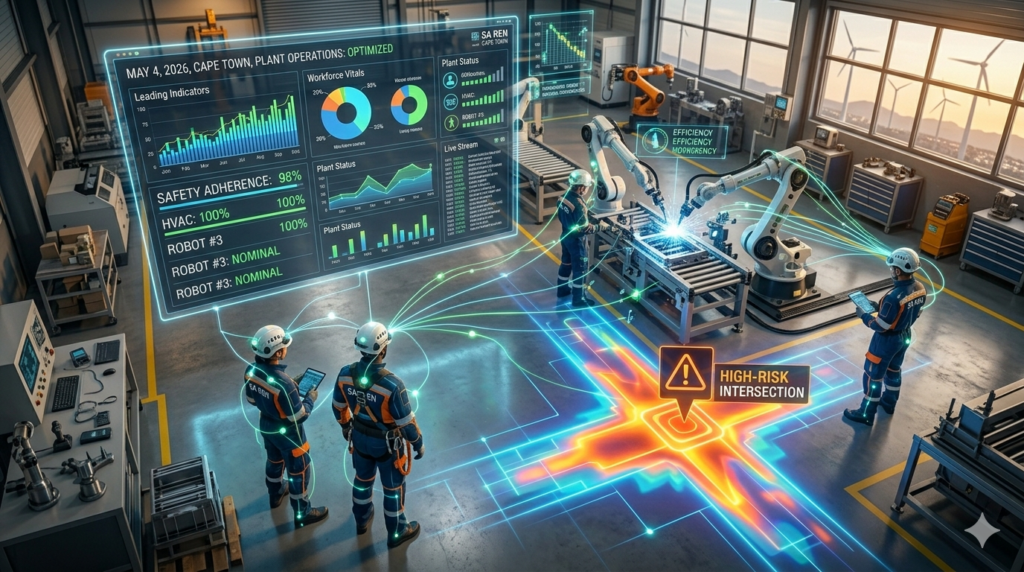
By integrating IoT-enabled wearables into standard gear, operations directors can establish a continuous stream of site telemetry.
These unobtrusive data nodes gather vast amounts of environmental and biometric information directly from the floor. This includes localized temperature spikes, sudden drops in air quality, and the exact proximity of workers to heavy machinery or designated hazardous zones.
Monitoring Actual Gear Usage
Crucially, this technology tracks exactly which specific gear is actually being worn.
By utilizing micro-RFID tags or sensor-equipped latches, safety managers gain absolute, unvarnished visibility into user adoption rates across different shifts and sectors of the plant.
The Power of Predictive Analytics
Gathering data is useless without intelligent application. When this continuous stream of telemetry is fed into modern Predictive Analytics platforms, it transforms site management.
Heatmapping Site Hazards
Data analysts can utilize localized wearable data to construct dynamic, real-time heat maps of your facility.
If multiple workers experience sudden, brief proximity alerts at a specific loading bay intersection, the system flags a “near-miss cluster.” Safety heads can immediately redesign the traffic flow in that exact location, eliminating a dangerous bottleneck before a catastrophic collision occurs.
Monitoring User Adoption in Real-Time
Data reveals the objective truth about site compliance and the hidden friction of daily operations.
If telemetry shows that workers in the humid refining sector are constantly removing their smart safety glasses, management can proactively investigate. Rather than waiting for a severe chemical splash to the eyes, analysts can identify the root cause—such as severe lens fogging—and procure anti-fog alternatives immediately.
The Economic ROI of Predictive Safety
Shifting your site from a reactive “damage control” model to a proactive, data-driven framework yields an immediate and massive Return on Investment (ROI).
When you prevent an accident rather than just surviving one, you completely bypass the crushing costs of operational downtime, regulatory investigations, and worker compensation claims.
Furthermore, this predictive model drastically reduces corporate insurance premiums and optimizes the entire procurement lifecycle by identifying exactly which gear performs best under specific operational stresses.
Build a Smarter Safety Architecture
The future of industrial safety in South Africa is undeniably data-driven. Relying on paper checklists and lagging indicators leaves your facility exposed to entirely preventable risks.
Is your site architecture equipped to predict the next hazard?
Contact VGH Safety today. Our experts will help you seamlessly integrate data-gathering wearables and smart PPE into your operational strategy, transforming your site from reactive to relentlessly proactive.