
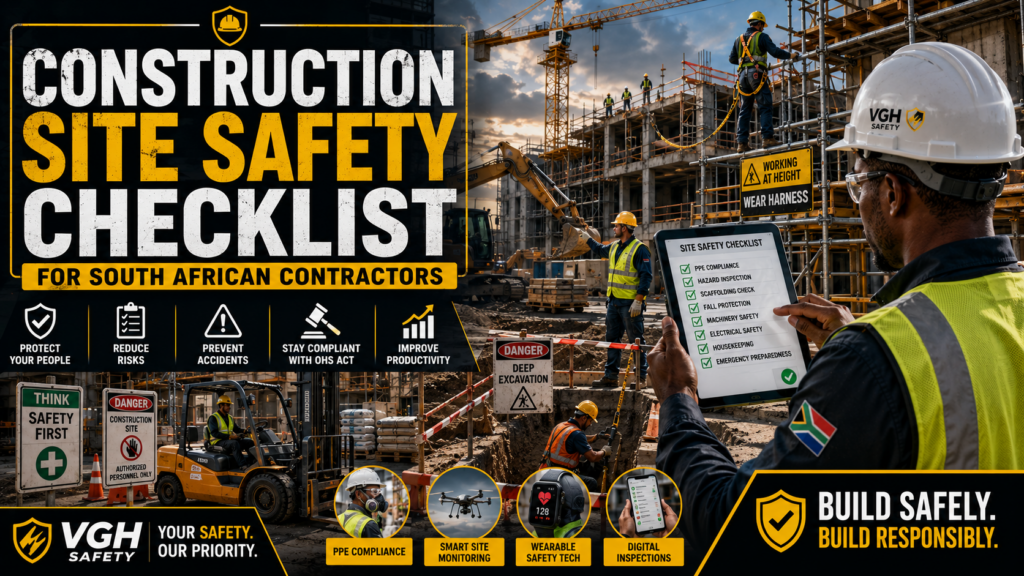
Construction sites remain some of the most dangerous working environments in South Africa. Every day, construction workers face risks from falling objects, working at heights, heavy machinery, electrical hazards, unstable structures, excavation collapses, dust exposure, and unsafe site conditions.
Without proper safety procedures, even small mistakes can lead to serious injuries, fatalities, project delays, legal liability, and costly operational disruptions.
For contractors and site managers, construction site safety South Africa is no longer simply about compliance. It is now a critical business priority that directly affects:
- Worker wellbeing
- Productivity
- Insurance costs
- Project timelines
- Legal exposure
- Company reputation
Many workplace incidents occur because of:
- Poor housekeeping
- Inadequate PPE
- Unsafe scaffolding
- Lack of training
- Weak supervision
- Failure to conduct inspections
- Improper risk assessments
South African contractors must therefore adopt proactive construction safety systems that reduce risk, improve compliance, and create safer working environments.
This comprehensive guide explains everything contractors need to know about construction site safety South Africa, including PPE requirements, site inspections, hazard prevention, legal responsibilities, emergency procedures, and practical safety checklists for modern construction projects.
Table of Contents
- Why Construction Sites Are High-Risk Environments
- Common Construction Site Hazards in South Africa
- OHS Act Responsibilities for Contractors
- Site Supervisor and Contractor Responsibilities
- Daily Construction Site Safety Inspections
- Construction Risk Assessment Procedures
- PPE Requirements for Construction Workers
- Hard Hats and Head Protection
- High-Visibility Clothing
- Fall Protection Systems
- Safety Boots and Foot Protection
- Respiratory Protection
- Hearing Protection
- Scaffold Safety
- Ladder Safety
- Electrical Safety on Construction Sites
- Heavy Machinery and Vehicle Safety
- Excavation and Trench Safety
- Working at Heights Regulations
- Emergency Evacuation Procedures
- Fire Prevention and Emergency Response
- Toolbox Talks and Worker Training
- Site Access Control and Visitor Management
- Heat Stress and Outdoor Worker Safety
- Construction Site Security Risks
- Load Shedding Safety on Construction Sites
- Weather-Related Construction Hazards
- Housekeeping and Debris Management
- Construction Safety Signage Requirements
- Incident Reporting Procedures
- Common Contractor Safety Mistakes
- Reducing Liability and Injuries
- Smart Construction Safety Technology for 2026
- Digital Site Inspections and Compliance Systems
- Real-World Construction Site Scenarios
- Frequently Asked Questions
- Final Thoughts
Why Construction Sites Are High-Risk Environments
Construction environments constantly change as projects progress. Workers operate around:
- Heavy machinery
- Elevated work areas
- Temporary structures
- Excavations
- Electrical systems
- Moving vehicles
- Hazardous materials
Unlike fixed workplaces, construction sites evolve daily, creating constantly shifting safety risks.
Construction site safety South Africa requires continuous monitoring and proactive risk management to reduce workplace incidents.
Common Construction Site Hazards in South Africa
Falls From Heights
Falls remain one of the leading causes of serious injuries and fatalities in construction.
Common risks include:
- Scaffolding failures
- Roof work
- Ladder misuse
- Unsafe edges
- Incomplete platforms
Falling Objects
Tools, debris, and materials falling from elevated areas can cause severe injuries.
Machinery Accidents
Workers face risks from:
- Excavators
- Cranes
- Forklifts
- Dump trucks
- Concrete equipment
Electrical Hazards
Temporary electrical systems often create:
- Electrocution risks
- Fire hazards
- Damaged cables
- Unsafe generators
Excavation Collapses
Trench collapses can trap workers and cause fatalities within seconds.
Dust Exposure
Construction dust may contain:
- Silica particles
- Cement dust
- Chemical contaminants
Long-term exposure creates respiratory risks.
OHS Act Responsibilities for Contractors
Under South Africa’s Occupational Health and Safety Act, employers and contractors must provide a workplace that is safe and without risk to workers.
Contractors must:
- Conduct risk assessments
- Provide PPE
- Train workers
- Maintain safe equipment
- Enforce safety procedures
- Conduct inspections
- Investigate incidents
Failure to comply may result in:
- Legal liability
- Site shutdowns
- Compensation claims
- Regulatory penalties
Construction site safety South Africa compliance should form part of every project management strategy.
Site Supervisor and Contractor Responsibilities
Site supervisors play a critical role in workplace safety.
Supervisors Must:
- Monitor hazards
- Conduct inspections
- Enforce PPE rules
- Stop unsafe work
- Report incidents
- Conduct toolbox talks
Contractors should ensure supervisors receive proper safety training.
Daily Construction Site Safety Inspections
Daily inspections help identify hazards before incidents occur.
Daily Inspection Areas
- Scaffolding
- Ladders
- Electrical systems
- PPE compliance
- Machinery condition
- Excavation stability
- Housekeeping
- Emergency exits
Inspections should be documented and reviewed regularly.
Construction Risk Assessment Procedures
Risk assessments form the foundation of construction site safety South Africa compliance.
Risk Assessment Steps
Identify Hazards
Inspect:
- Work areas
- Equipment
- Environmental risks
- Worker activities
Assess Risk Severity
Determine:
- Likelihood of incidents
- Potential injury severity
- Number of workers exposed
Implement Control Measures
Use:
- PPE
- Engineering controls
- Training
- Supervision
- Signage
Review Regularly
Risk assessments should be updated as site conditions change.
PPE Requirements for Construction Workers
PPE is essential on construction sites.
Basic Construction PPE Includes
- Hard hats
- Safety boots
- High-visibility clothing
- Gloves
- Eye protection
- Hearing protection
- Respiratory protection
PPE should always match the specific hazards present on-site.
Hard Hats and Head Protection
Hard hats protect workers from:
- Falling objects
- Impact injuries
- Electrical contact
Hard Hat Safety Tips
- Inspect for cracks
- Replace damaged helmets
- Avoid excessive UV exposure
- Replace after impact
South African sunlight can rapidly degrade helmet materials.
High-Visibility Clothing
High-vis clothing improves worker visibility around:
- Vehicles
- Machinery
- Low-light environments
Reflective PPE is especially important during:
- Early morning work
- Night shifts
- Load shedding conditions
Fall Protection Systems
Working at heights requires proper fall protection systems.
Fall Protection Equipment Includes
- Harnesses
- Lifelines
- Anchor points
- Guardrails
- Safety nets
Workers operating at height should receive specialised training.
Safety Boots and Foot Protection
Construction workers face risks from:
- Sharp debris
- Heavy objects
- Slippery surfaces
- Puncture hazards
Safety Footwear Should Provide
- Slip resistance
- Steel or composite toe protection
- Ankle support
- Puncture resistance
Respiratory Protection
Dust and airborne contaminants create major health risks.
Respiratory Hazards Include
- Silica dust
- Cement dust
- Chemical fumes
- Welding smoke
Workers should use:
- Dust masks
- Respirators
- Filter systems
depending on exposure levels.
Hearing Protection
Construction sites often exceed safe noise levels.
Noise Sources Include
- Jackhammers
- Grinders
- Heavy machinery
- Cutting equipment
Long-term exposure may cause permanent hearing loss.
Scaffold Safety
Unsafe scaffolding creates serious fall hazards.
Scaffold Safety Requirements
- Stable foundations
- Guardrails
- Proper access points
- Load compliance
- Routine inspections
Scaffolding should only be erected by trained personnel.
Ladder Safety
Ladder misuse remains a major cause of construction injuries.
Ladder Safety Tips
- Use stable surfaces
- Maintain three points of contact
- Avoid overreaching
- Inspect ladders regularly
- Use correct ladder types
Electrical Safety on Construction Sites
Temporary electrical systems require strict safety controls.
Electrical Risks Include
- Damaged cables
- Wet conditions
- Unsafe generators
- Improper grounding
Electrical Safety Best Practices
- Use qualified electricians
- Inspect cables regularly
- Protect extension cords
- Maintain lockout procedures
Heavy Machinery and Vehicle Safety
Construction vehicles create major workplace hazards.
Common Risks Include
- Reversing accidents
- Blind spots
- Vehicle rollovers
- Pedestrian collisions
Safety Measures Include
- Spotters
- Reversing alarms
- Segregated walkways
- Vehicle inspections
Excavation and Trench Safety
Excavations can collapse without warning.
Excavation Risks Include
- Cave-ins
- Falling debris
- Underground utility damage
- Water accumulation
Safety Measures Include
- Trench shoring
- Barricades
- Soil inspections
- Safe access routes
Working at Heights Regulations
Working at heights remains heavily regulated due to fatality risks.
Height Safety Requirements Include
- Fall arrest systems
- Edge protection
- Competent supervision
- Worker training
- Rescue procedures
Unsafe elevated work should stop immediately.
Emergency Evacuation Procedures
Construction sites require clear evacuation plans.
Emergency Plans Should Include
- Exit routes
- Assembly areas
- Emergency contacts
- Rescue procedures
Emergency drills improve preparedness.
Fire Prevention and Emergency Response
Construction sites often contain:
- Flammable materials
- Gas cylinders
- Welding activities
- Fuel storage
Fire Safety Measures Include
- Fire extinguishers
- Hot work permits
- Emergency alarms
- Fire response training
Toolbox Talks and Worker Training
Toolbox talks help reinforce safety awareness.
Toolbox Talk Topics Include
- PPE use
- Fall protection
- Machinery hazards
- Heat stress
- Electrical safety
Regular training improves compliance and reduces incidents.
Site Access Control and Visitor Management
Unauthorised access creates major risks.
Construction Site Access Controls Include
- Visitor sign-in systems
- PPE requirements
- Security fencing
- Restricted zones
Visitors should receive safety briefings before entering active sites.
Heat Stress and Outdoor Worker Safety
South African construction workers often operate in extreme temperatures.
Heat Stress Symptoms Include
- Dizziness
- Fatigue
- Headaches
- Confusion
Prevention Measures Include
- Hydration breaks
- Shade areas
- Cooling PPE
- Rest periods
Construction Site Security Risks
Construction sites are vulnerable to:
- Theft
- Vandalism
- Trespassing
Security Measures Include
- Perimeter fencing
- CCTV systems
- Security patrols
- Access control
Load shedding increases security vulnerabilities significantly.
Load Shedding Safety on Construction Sites
Power outages create serious construction hazards.
Risks Include
- Reduced visibility
- Machinery instability
- Lift failures
- Electrical surges
Safety Measures Include
- Emergency lighting
- Generator safety systems
- Shutdown procedures
- Communication protocols
Weather-Related Construction Hazards
Weather conditions create changing site risks.
Common Weather Hazards Include
- Heavy rain
- High winds
- Lightning
- Extreme heat
Unsafe weather conditions may require temporary work stoppages.
Housekeeping and Debris Management
Poor housekeeping causes:
- Trip hazards
- Fire risks
- Falling debris
- Access blockages
Good Housekeeping Includes
- Waste removal
- Clean walkways
- Organised storage
- Debris containment
Construction Safety Signage Requirements
Safety signage improves hazard awareness.
Common Construction Signs Include
- PPE mandatory signs
- Danger notices
- Restricted area signs
- Emergency exit signs
- Electrical hazard warnings
Signs should remain visible and properly maintained.
Incident Reporting Procedures
All incidents and near misses should be reported immediately.
Reporting Procedures Should Include
- Incident documentation
- Witness statements
- Hazard investigation
- Corrective actions
Incident reporting helps prevent repeat accidents.
Common Contractor Safety Mistakes
Poor Supervision
Weak supervision increases unsafe behaviour.
Ignoring PPE Compliance
Workers without PPE remain highly vulnerable to injury.
Inadequate Risk Assessments
Failure to identify hazards creates preventable risks.
Poor Housekeeping
Messy sites significantly increase injury risks.
Delaying Maintenance
Unsafe equipment should never remain in service.
Reducing Liability and Injuries
Strong construction safety systems help businesses:
- Reduce injuries
- Improve productivity
- Lower compensation claims
- Improve compliance
- Strengthen client confidence
Construction site safety South Africa strategies should focus on prevention rather than reactive responses.
Smart Construction Safety Technology for 2026
Technology is rapidly transforming construction safety.
Emerging Safety Technologies Include
- Smart helmets
- Wearable safety sensors
- AI hazard monitoring
- GPS worker tracking
- Digital compliance systems
These technologies improve:
- Incident prevention
- Worker monitoring
- Emergency response
- Compliance tracking
Digital Site Inspections and Compliance Systems
Digital inspection systems allow contractors to:
- Conduct mobile inspections
- Track hazards
- Record incidents
- Monitor PPE compliance
QR-coded systems improve accountability and reporting efficiency.
Real-World Construction Site Scenarios
Scenario 1: Scaffold Collapse
Improper scaffold assembly causes structural instability.
Workers fall due to missing guardrails and unsafe access.
Routine inspections and competent supervision would have reduced the risk.
Scenario 2: Electrical Cable Damage
A damaged extension cable remains exposed in wet conditions.
A worker suffers an electrical shock during equipment use.
Routine electrical inspections could have prevented the incident.
Scenario 3: Heat Stress Incident
A worker performs heavy labour during extreme heat without adequate hydration.
The worker collapses from heat exhaustion.
Proper heat stress management procedures should have been implemented.
Why Contractors Should Work With Workplace Safety Specialists
Managing construction site safety South Africa risks requires:
- Reliable PPE
- Site safety planning
- Hazard management
- Compliance expertise
VGH Safety helps contractors improve site safety through:
- PPE solutions
- Safety equipment
- Compliance support
- Workplace safety guidance
Whether managing small projects or large industrial developments, proactive safety systems help protect workers, improve compliance, and reduce operational risk.
Frequently Asked Questions
Why are construction sites so dangerous?
Construction sites involve:
- Heavy machinery
- Elevated work
- Electrical systems
- Constant environmental changes
These factors create multiple high-risk hazards.
Is PPE mandatory on South African construction sites?
Yes. Employers must provide appropriate PPE under Occupational Health and Safety regulations.
What is the biggest construction site hazard?
Falls from heights remain one of the leading causes of serious injuries and fatalities.
How often should construction site inspections occur?
Safety inspections should occur daily, with formal audits conducted regularly.
How can contractors improve construction safety?
Contractors should:
- Conduct risk assessments
- Train workers
- Enforce PPE compliance
- Maintain equipment
- Use digital inspection systems
Final Thoughts
Construction sites remain among the most hazardous workplaces in South Africa. Without proper planning, supervision, PPE, and risk management, construction workers face serious injury risks every day.
A proactive construction site safety South Africa strategy helps businesses:
- Reduce incidents
- Improve compliance
- Protect workers
- Lower liability
- Improve productivity
Successful contractors understand that safety is not simply a legal requirement. It is a critical operational investment that protects workers, projects, and long-term business stability.
VGH Safety provides workplace safety solutions designed for demanding South African construction environments, helping contractors improve compliance, emergency preparedness, PPE management, and overall site safety performance.