
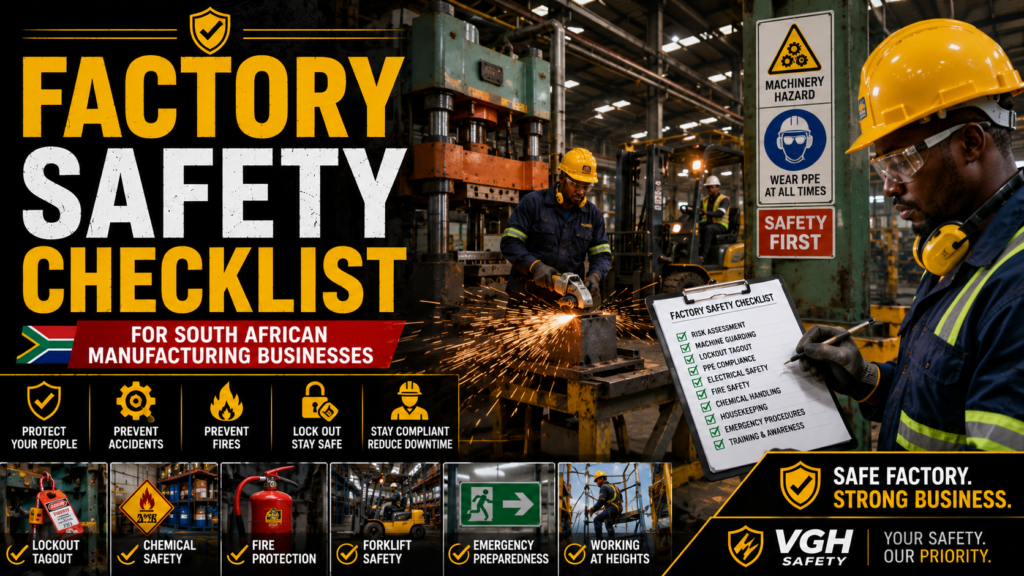
Factories remain some of the most hazardous workplaces in South Africa. Manufacturing facilities combine heavy machinery, electrical systems, forklifts, conveyors, chemicals, high temperatures, moving equipment, and fast-paced production environments that create serious workplace risks every day.
Without proper safety systems, even a small mistake can result in:
- Severe workplace injuries
- Machinery accidents
- Chemical exposure
- Electrical fires
- Production downtime
- Regulatory penalties
- Expensive compensation claims
- Legal liability
Many factory incidents occur because of:
- Poor machine guarding
- Inadequate PPE
- Unsafe lockout procedures
- Poor housekeeping
- Weak supervision
- Inadequate training
- Failure to conduct inspections
For modern industrial businesses, factory safety South Africa is no longer simply a compliance issue. It has become a critical operational strategy that directly affects:
- Worker safety
- Production continuity
- Insurance costs
- Compliance
- Business reputation
- Long-term profitability
This guide explains everything South African manufacturing businesses need to know about factory safety South Africa, including machine safety, industrial PPE, emergency procedures, lockout tagout systems, risk assessments, and practical factory safety checklists.
Table of Contents
- Why Factories Are High-Risk Environments
- Common Manufacturing Hazards in South Africa
- Machine Guarding Requirements
- Lockout Tagout Procedures
- Conveyor Safety
- Electrical Safety in Factories
- Industrial Fire Risks
- Chemical Handling Safety
- Slips, Trips, and Falls in Factories
- Noise Hazards and Hearing Protection
- Respiratory Hazards in Manufacturing
- PPE Requirements for Factories
- Hard Hats and Head Protection
- Industrial Gloves and Hand Protection
- Eye and Face Protection
- Safety Footwear
- High-Visibility Clothing
- Heat Stress in Factories
- Forklift Safety in Manufacturing Facilities
- Manual Handling and Ergonomic Risks
- Working at Heights in Industrial Environments
- Emergency Evacuation Procedures
- Load Shedding Safety in Factories
- Fire Extinguisher Requirements
- Hazardous Material Storage
- Toolbox Talks and Employee Safety Training
- Contractor and Visitor Safety Procedures
- Daily Factory Safety Inspections
- Incident Reporting and Investigation
- Common Factory Safety Mistakes
- Reducing Workplace Injuries and Downtime
- Smart Factory Safety Technology for 2026
- AI-Powered Industrial Monitoring Systems
- Wearable Industrial Safety Technology
- Digital Factory Inspections and Compliance Systems
- Real-World South African Factory Scenarios
- Frequently Asked Questions
- Final Thoughts
Why Factories Are High-Risk Environments
Factories contain multiple high-risk operational activities occurring simultaneously.
Workers often operate around:
- Industrial machinery
- Conveyors
- Forklifts
- Electrical systems
- Chemicals
- High-temperature equipment
- Pressurised systems
- Moving production lines
Fast-paced manufacturing environments also create pressure to maintain productivity, which often contributes to unsafe behaviour and shortcuts.
Factory safety South Africa strategies are essential for reducing injuries, improving compliance, and maintaining operational continuity.
Common Manufacturing Hazards in South Africa
Machinery Accidents
Workers face risks from:
- Rotating equipment
- Conveyor belts
- Cutting machinery
- Press machines
- Moving components
Electrical Hazards
Electrical systems create:
- Shock risks
- Fire hazards
- Arc flash incidents
- Equipment instability
Chemical Exposure
Factories often use:
- Solvents
- Cleaning agents
- Industrial chemicals
- Paints
- Fuels
Slips, Trips, and Falls
Oil spills, poor housekeeping, and wet floors create major hazards.
Fire Risks
Industrial facilities contain multiple ignition sources and combustible materials.
Noise Exposure
Long-term machinery noise may cause permanent hearing damage.
Machine Guarding Requirements
Machine guarding protects workers from moving machinery components.
Machine Hazards Include
- Rotating shafts
- Conveyor pinch points
- Cutting blades
- Flying debris
Guarding Systems Should
- Prevent worker contact
- Remain securely fixed
- Be inspected regularly
- Meet operational requirements
Removing guards creates severe injury risks.
Lockout Tagout Procedures
Lockout tagout systems prevent accidental machinery startup during maintenance or repairs.
Lockout Tagout Steps
- Shut down equipment
- Isolate energy sources
- Apply locks and warning tags
- Verify isolation
- Perform maintenance safely
Lockout Risks Include
- Unexpected startup
- Electrical shock
- Crushing injuries
- Entanglement
Lockout tagout South Africa compliance is critical in manufacturing environments.
Conveyor Safety
Conveyors create multiple injury risks in factories.
Conveyor Hazards Include
- Pinch points
- Entanglement
- Falling materials
- Unexpected startup
Conveyor Safety Measures
- Install emergency stop systems
- Maintain guarding
- Conduct inspections
- Train workers properly
Electrical Safety in Factories
Factories rely heavily on electrical systems.
Common Electrical Risks Include
- Damaged cables
- Overloaded systems
- Water exposure
- Faulty machinery
Electrical Safety Best Practices
- Use qualified electricians
- Conduct inspections regularly
- Maintain lockout procedures
- Replace damaged equipment immediately
Industrial Fire Risks
Factory fires can spread rapidly and cause catastrophic damage.
Common Fire Hazards Include
- Flammable chemicals
- Electrical faults
- Welding activities
- Fuel storage
- Overheated equipment
Fire Prevention Measures
Factories should:
- Maintain extinguishers
- Install fire detection systems
- Conduct inspections
- Train workers in emergency response
Chemical Handling Safety
Industrial chemicals require strict safety controls.
Chemical Risks Include
- Toxic exposure
- Burns
- Explosions
- Respiratory hazards
Chemical Safety Measures Include
- Proper labelling
- Ventilation systems
- Spill kits
- PPE compliance
- Safe storage procedures
Slips, Trips, and Falls in Factories
Slip and fall incidents remain common in manufacturing environments.
Common Causes Include
- Oil spills
- Wet floors
- Loose cables
- Poor housekeeping
- Damaged flooring
Prevention Measures Include
- Cleaning spills immediately
- Maintaining walkways
- Using anti-slip flooring
- Conducting inspections
Noise Hazards and Hearing Protection
Factories often exceed safe noise exposure levels.
Noise Sources Include
- Press machines
- Compressors
- Cutting equipment
- Production lines
Long-term exposure may lead to permanent hearing loss.
Hearing Protection Includes
- Earplugs
- Earmuffs
- Electronic hearing protection
Respiratory Hazards in Manufacturing
Manufacturing environments may expose workers to:
- Dust
- Fumes
- Vapours
- Welding smoke
- Chemical particles
Respiratory Protection Includes
- Dust masks
- Respirators
- Ventilation systems
- Air filtration equipment
PPE Requirements for Factories
Industrial PPE significantly reduces injury risks.
Common Industrial PPE Includes
- Hard hats
- Safety footwear
- Gloves
- Eye protection
- Respiratory protection
- Hearing protection
- High-visibility clothing
PPE should match the specific factory hazards present.
Hard Hats and Head Protection
Head injuries may occur from:
- Falling objects
- Machinery impact
- Overhead hazards
Hard hats should be inspected regularly and replaced when damaged.
Industrial Gloves and Hand Protection
Hands remain highly vulnerable in manufacturing environments.
Common Risks Include
- Cuts
- Burns
- Chemical exposure
- Crush injuries
Glove Types Include
- Cut-resistant gloves
- Heat-resistant gloves
- Chemical-resistant gloves
- Grip gloves
Eye and Face Protection
Eye injuries can occur from:
- Flying particles
- Sparks
- Chemicals
- Welding operations
Eye Protection Includes
- Safety glasses
- Face shields
- Welding helmets
- Chemical splash goggles
Safety Footwear
Factory floors often contain:
- Sharp debris
- Heavy equipment
- Slippery surfaces
Safety Footwear Should Include
- Steel or composite toe protection
- Slip resistance
- Puncture resistance
- Ankle support
High-Visibility Clothing
High-vis PPE improves worker visibility around:
- Forklifts
- Vehicles
- Machinery
- Loading areas
Reflective clothing becomes especially important during load shedding conditions.
Heat Stress in Factories
South African factories often become extremely hot during summer.
Heat Stress Symptoms Include
- Fatigue
- Dizziness
- Dehydration
- Reduced concentration
Prevention Measures Include
- Hydration stations
- Ventilation systems
- Cooling breaks
- Heat awareness training
Forklift Safety in Manufacturing Facilities
Forklifts create serious factory hazards.
Common Forklift Risks Include
- Pedestrian collisions
- Falling loads
- Blind spot accidents
- Tipping incidents
Safety Measures Include
- Operator training
- Traffic management systems
- Daily inspections
- Warning alarms
Manual Handling and Ergonomic Risks
Poor lifting techniques cause many workplace injuries.
Common Injuries Include
- Back strain
- Muscle injuries
- Shoulder injuries
Safe Handling Practices Include
- Proper lifting techniques
- Mechanical lifting aids
- Ergonomic workstations
- Worker training
Working at Heights in Industrial Environments
Factories often require maintenance or operational work at elevated heights.
Height Risks Include
- Falls from platforms
- Ladder misuse
- Unprotected edges
Safety Measures Include
- Harness systems
- Guardrails
- Ladder inspections
- Worker training
Emergency Evacuation Procedures
Factories require clear evacuation procedures.
Emergency Plans Should Include
- Exit routes
- Assembly areas
- Emergency contacts
- Fire response procedures
Emergency drills improve preparedness and response times.
Load Shedding Safety in Factories
Load shedding creates serious factory safety South Africa challenges.
Risks Include
- Machinery instability
- Visibility loss
- Electrical surges
- Production disruption
Safety Measures Include
- Emergency lighting
- Backup power systems
- Controlled shutdown procedures
- Communication systems
Fire Extinguisher Requirements
Factories require accessible fire protection systems.
Common Fire Extinguishers Include
- Dry chemical extinguishers
- CO2 extinguishers
- Foam extinguishers
Workers should receive fire extinguisher training.
Hazardous Material Storage
Improper storage creates severe risks.
Storage Risks Include
- Chemical reactions
- Fires
- Toxic exposure
- Explosions
Safe Storage Measures Include
- Segregated storage
- Ventilation
- Spill containment
- Proper labelling
Toolbox Talks and Employee Safety Training
Regular training reinforces workplace safety awareness.
Toolbox Talk Topics Include
- Machine safety
- PPE compliance
- Fire prevention
- Lockout procedures
- Emergency response
Training improves compliance and reduces incidents.
Contractor and Visitor Safety Procedures
Visitors unfamiliar with factory hazards require supervision.
Visitor Safety Measures Include
- Sign-in procedures
- PPE requirements
- Safety briefings
- Restricted access areas
Daily Factory Safety Inspections
Daily inspections improve hazard identification.
Inspection Areas Include
- Machinery
- Electrical systems
- PPE compliance
- Emergency exits
- Fire equipment
- Housekeeping
Inspection records should be documented properly.
Incident Reporting and Investigation
All incidents and near misses should be reported immediately.
Reporting Procedures Should Include
- Incident documentation
- Witness statements
- Root cause investigations
- Corrective actions
Incident investigations help prevent repeat accidents.
Common Factory Safety Mistakes
Ignoring PPE Compliance
Workers without PPE remain highly vulnerable to injury.
Poor Housekeeping
Cluttered environments create unnecessary hazards.
Delaying Equipment Maintenance
Unsafe machinery should never remain operational.
Weak Lockout Procedures
Failure to isolate machinery properly creates severe risks.
Inadequate Training
Untrained workers contribute to preventable incidents.
Reducing Workplace Injuries and Downtime
Strong factory safety South Africa systems help businesses:
- Reduce injuries
- Improve compliance
- Lower insurance costs
- Reduce downtime
- Improve productivity
Safety should form part of every operational strategy.
Smart Factory Safety Technology for 2026
Technology is rapidly transforming industrial safety.
Emerging Technologies Include
- Smart helmets
- AI hazard monitoring
- Wearable safety sensors
- Automated compliance tracking
- Machine safety sensors
These systems improve:
- Worker safety
- Hazard detection
- Emergency response
- Operational efficiency
AI-Powered Industrial Monitoring Systems
AI systems can:
- Detect unsafe behaviour
- Monitor machine conditions
- Identify blocked exits
- Track PPE compliance
Real-time alerts improve incident prevention.
Wearable Industrial Safety Technology
Wearable safety technology includes:
- Fatigue monitoring devices
- GPS tracking systems
- Heat stress monitors
- Collision alerts
These technologies improve workplace protection significantly.
Digital Factory Inspections and Compliance Systems
Digital inspection systems allow businesses to:
- Track hazards
- Record inspections
- Monitor maintenance
- Generate compliance reports
QR code systems improve accountability and operational efficiency.
Real-World South African Factory Scenarios
Scenario 1: Conveyor Entanglement Incident
A worker attempts to clear material from an active conveyor.
The worker becomes entangled due to inadequate guarding and failure to apply lockout procedures.
Proper machine guarding and lockout systems would have prevented the incident.
Scenario 2: Electrical Fire During Load Shedding
Power restoration causes a voltage surge inside a manufacturing facility.
Faulty wiring triggers an electrical fire.
Regular inspections and surge protection systems would have reduced the risk.
Scenario 3: Chemical Spill Exposure
Improperly stored chemicals leak into a production area.
Workers experience respiratory irritation and chemical exposure.
Correct storage procedures and spill response planning were required.
Why Businesses Should Work With Industrial Safety Specialists
Managing factory safety South Africa risks requires:
- Reliable PPE
- Machine safety systems
- Emergency preparedness
- Compliance expertise
VGH Safety helps businesses improve industrial workplace safety through:
- Industrial PPE solutions
- Workplace safety equipment
- Compliance support
- Hazard management guidance
Whether operating factories, production facilities, engineering workshops, or industrial plants, proactive workplace safety systems help protect workers and reduce operational risk.
Frequently Asked Questions
Why are factories considered dangerous workplaces?
Factories contain:
- Heavy machinery
- Electrical systems
- Chemicals
- Forklifts
- High-temperature equipment
These hazards create multiple injury risks.
What PPE is required in factories?
Common industrial PPE includes:
- Hard hats
- Gloves
- Safety footwear
- Eye protection
- Hearing protection
What is lockout tagout?
Lockout tagout is a safety procedure used to isolate machinery during maintenance to prevent accidental startup.
How often should factory safety inspections occur?
Daily inspections should occur before operations begin, with formal audits conducted regularly.
How can factories improve workplace safety?
Factories should:
- Conduct risk assessments
- Train workers
- Maintain machinery
- Enforce PPE compliance
- Improve housekeeping
Final Thoughts
Factories remain high-risk environments where poor safety management can result in severe injuries, operational disruptions, legal liability, and major financial losses.
A proactive factory safety South Africa strategy helps businesses:
- Protect workers
- Improve compliance
- Reduce downtime
- Lower insurance costs
- Improve operational efficiency
Successful manufacturing businesses understand that workplace safety is not simply a regulatory requirement. It is a critical operational investment that protects employees, improves productivity, and strengthens long-term business stability.
VGH Safety provides industrial workplace safety solutions designed for demanding South African manufacturing environments, helping businesses improve PPE compliance, emergency preparedness, hazard management, and overall factory safety performance.