
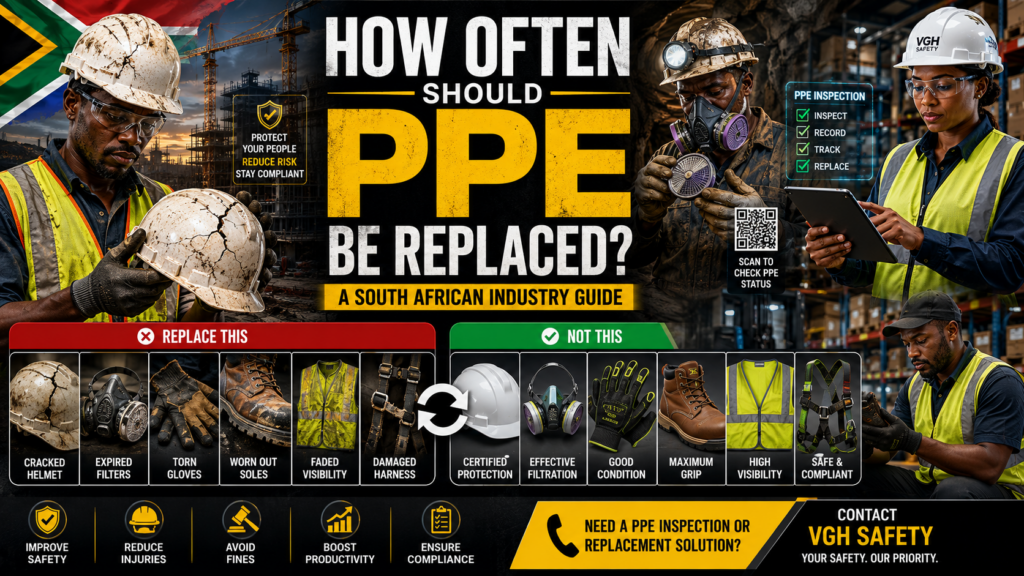
Personal Protective Equipment plays a critical role in workplace safety across South Africa. From construction sites and warehouses to mines, factories, farms, and security operations, PPE protects workers from serious injuries, long-term health complications, and fatal workplace incidents.
However, many businesses unknowingly place workers at risk by using old, damaged, expired, or poorly maintained safety equipment long after it should have been replaced.
A cracked hard hat, worn-out safety boots, faded reflective clothing, or expired respirator filters may seem like minor issues, but in hazardous environments these failures can result in devastating consequences.
Understanding the correct PPE replacement schedule is essential for:
- Workplace safety
- OHS Act compliance
- Reducing liability
- Improving productivity
- Preventing workplace injuries
- Passing safety inspections
- Protecting employees
South African environmental conditions such as intense UV exposure, dust, heat, heavy industrial use, and outdoor working environments can significantly reduce PPE lifespan.
This guide explains everything employers need to know about:
- PPE lifespan South Africa
- When to replace safety gear
- PPE inspection procedures
- Industry-specific replacement schedules
- Common PPE maintenance mistakes
- Smart PPE tracking systems
- Workplace safety compliance
Table of Contents
- Why PPE Replacement Matters
- PPE Compliance and South African Regulations
- Risks of Using Expired PPE
- Factors That Affect PPE Lifespan
- Signs PPE Should Be Replaced Immediately
- PPE Inspection Procedures
- Daily, Weekly, and Monthly PPE Inspections
- PPE Replacement Schedule by PPE Type
- Industry-Specific PPE Replacement Advice
- South African Environmental Challenges
- Proper PPE Storage Guidelines
- Common PPE Maintenance Mistakes
- How PPE Replacement Reduces Liability
- PPE Budgeting and Replacement Planning
- Smart PPE Tracking Systems for 2026
- Digital PPE Compliance Solutions
- Real-World Workplace Scenarios
- Frequently Asked Questions
- Final Thoughts
Why PPE Replacement Matters
Personal Protective Equipment is designed to absorb impact, reduce exposure to hazards, and protect workers from dangerous environments. Over time, however, all PPE deteriorates.
Even if PPE appears visually acceptable, internal structural damage may already compromise its protective ability.
Factors such as:
- UV exposure
- Heat
- Chemicals
- Dust
- Moisture
- Abrasion
- Sweat
- Repeated impacts
can significantly reduce PPE performance.
Using damaged PPE creates a false sense of safety. Workers may believe they are protected when the equipment can no longer perform properly.
A structured PPE replacement schedule helps businesses:
- Improve worker safety
- Maintain compliance
- Reduce injury claims
- Minimise downtime
- Improve operational efficiency
- Lower insurance risks
PPE Compliance and South African Regulations
Under South Africa’s Occupational Health and Safety Act, employers are legally responsible for ensuring workers are provided with suitable PPE that remains effective and properly maintained.
Employers must:
- Provide appropriate PPE
- Replace damaged or expired equipment
- Conduct inspections
- Train workers
- Enforce PPE policies
- Maintain safety records
Failure to comply with workplace safety regulations South Africa requirements may result in:
- Fines
- Compensation claims
- Site shutdowns
- Legal liability
- Reputational damage
PPE compliance South Africa depends heavily on proactive maintenance and replacement planning.
Risks of Using Expired PPE
Increased Workplace Injuries
Old or damaged PPE may fail during:
- Impacts
- Falls
- Chemical exposure
- Electrical incidents
- Dust exposure
This increases the likelihood of serious injuries.
Reduced Protection
Expired PPE may:
- Lose impact resistance
- Allow chemical penetration
- Reduce visibility
- Lose slip resistance
- Fail to filter airborne particles
Regulatory Penalties
Safety inspectors may issue:
- Non-compliance notices
- Fines
- Stop-work orders
if expired PPE is identified during inspections.
Legal Liability
Employers using unsafe PPE may face:
- Negligence claims
- Compensation disputes
- Legal action
Operational Downtime
Workplace incidents often result in:
- Investigations
- Delays
- Production interruptions
- Increased insurance costs
Factors That Affect PPE Lifespan
UV Exposure
South Africa’s strong sunlight rapidly damages:
- Hard hats
- Reflective clothing
- Plastics
- Rubber components
UV exposure causes brittleness and fading.
Heat
Excessive temperatures may:
- Warp plastics
- Weaken adhesives
- Reduce flexibility
- Damage reflective materials
Moisture
Moisture contributes to:
- Corrosion
- Mould
- Material degradation
- Reduced insulation
Dust
Dust-heavy environments reduce the effectiveness of:
- Respirators
- Filters
- Moving PPE components
Chemical Exposure
Chemicals accelerate deterioration of:
- Gloves
- Protective suits
- Respirators
- Face shields
Heavy Industrial Use
Daily wear and tear causes:
- Abrasion
- Impact damage
- Material fatigue
- Reduced protective performance
Poor Storage
Incorrect storage conditions dramatically shorten PPE lifespan South Africa across all industries.
Signs PPE Should Be Replaced Immediately
Employers and workers should replace PPE immediately if they notice visible damage or reduced performance.
Hard Hats
Replace immediately if:
- Cracked
- Dented
- Brittle
- Faded
- Exposed to severe impact
Respirators
Replace if:
- Seal weakens
- Straps fail
- Filters expire
- Cracks appear
Safety Gloves
Replace if:
- Torn
- Punctured
- Contaminated
- Grip deteriorates
Safety Boots
Replace if:
- Soles worn down
- Toe caps damaged
- Slip resistance reduced
- Water resistance lost
High-Visibility Clothing
Replace if:
- Reflective strips fade
- Tears appear
- Colours lose visibility
Harnesses
Replace immediately if:
- Frayed
- Cut
- Exposed to impact
- Buckles damaged
PPE Inspection Procedures
Regular inspections are essential for maintaining workplace PPE compliance.
Inspection procedures should include:
- Visual inspections
- Functional testing
- Cleaning verification
- Documentation
- Replacement tracking
Workers should inspect PPE before each shift.
Formal inspections should be conducted by:
- Safety officers
- Supervisors
- Site managers
Daily PPE Inspection Checklist
Workers should inspect:
- Cracks
- Tears
- Loose fittings
- Missing parts
- Contamination
- Fit and comfort
Any damaged PPE should be removed from service immediately.
Weekly PPE Inspection Checklist
Weekly inspections should review:
- Storage conditions
- Cleaning compliance
- Equipment condition
- Expiry dates
- Replacement needs
Monthly PPE Inspection Checklist
Monthly inspections should include:
- Compliance audits
- Documentation reviews
- PPE inventory tracking
- Replacement forecasting
- Supervisor sign-offs
PPE Replacement Schedule by PPE Type
Hard Hats and Safety Helmets
Recommended Replacement Schedule
- Every 2 to 5 years depending on manufacturer specifications
- Immediately after impact
South African Considerations
High UV exposure often shortens helmet lifespan in construction and mining environments.
Respirators
Recommended Replacement Schedule
- Replace filters according to exposure conditions
- Replace facepieces when damaged or seal weakens
Replace Immediately If:
- Breathing resistance increases
- Cracks appear
- Straps fail
Dust Masks
Recommended Replacement Schedule
- Disposable masks should be replaced daily or after contamination
Dust-heavy environments may require more frequent replacement.
Safety Goggles and Face Shields
Recommended Replacement Schedule
Replace when:
- Scratched
- Cracked
- Visibility reduced
Poor visibility increases accident risk.
Safety Gloves
Recommended Replacement Schedule
Depends on:
- Exposure type
- Material
- Industry conditions
Some industrial environments require daily glove replacement.
Safety Boots
Recommended Replacement Schedule
- Every 6 to 12 months under heavy use
Replace Earlier If:
- Soles worn smooth
- Toe protection damaged
- Stitching compromised
High-Visibility Clothing
Recommended Replacement Schedule
Replace when:
- Reflective strips fade
- Fabric tears
- Visibility decreases
UV exposure significantly reduces reflective performance.
Hearing Protection
Disposable Earplugs
Replace daily.
Reusable Ear Protection
Replace cushions and seals regularly.
Harnesses and Fall Arrest Equipment
Recommended Replacement Schedule
- According to manufacturer guidelines
- Immediately after any fall incident
Harnesses require formal inspections by qualified personnel.
Flame-Resistant Clothing
Replace If:
- Burned
- Torn
- Chemically contaminated
- Protective coating deteriorates
Industry-Specific PPE Replacement Advice
Construction Industry
Construction sites expose PPE to:
- UV radiation
- Dust
- Heavy impacts
- Abrasion
Hard hats, gloves, and safety boots require frequent inspections.
Mining Industry
Mining environments accelerate PPE wear due to:
- Dust
- Moisture
- Abrasion
- Extreme conditions
Respiratory protection should be monitored carefully.
Warehousing and Logistics
Warehouse PPE often experiences:
- Footwear wear
- Friction damage
- Constant movement
Safety footwear inspections are especially important.
Agriculture Industry
Agricultural workers face:
- Chemical exposure
- UV exposure
- Heat stress
- Moisture
Outdoor conditions shorten PPE lifespan considerably.
Manufacturing Industry
Manufacturing environments expose PPE to:
- Sparks
- Heat
- Machinery hazards
- Oils
- Chemicals
Gloves and eye protection often require more frequent replacement.
Security Industry
Security officers frequently work:
- Outdoors
- At night
- In changing weather conditions
Reflective clothing and weather-resistant footwear should be monitored closely.
South African Environmental Challenges
South African workplaces face unique environmental conditions that accelerate PPE deterioration.
High UV Levels
Strong sunlight damages:
- Plastics
- Fabrics
- Reflective materials
Heat Stress
Excessive heat contributes to:
- Material degradation
- Worker discomfort
- Sweat contamination
Dust Exposure
Dust-heavy industries reduce respirator and filter lifespan significantly.
Load Shedding Hazards
Power outages create:
- Reduced visibility
- Emergency evacuation risks
- Generator hazards
Emergency PPE must remain accessible and compliant.
Proper PPE Storage Guidelines
Correct storage significantly extends PPE lifespan.
Best Practices
Store PPE:
- In cool dry environments
- Away from sunlight
- Away from chemicals
- In clean designated areas
- Off dirty floors
Avoid:
- Direct sunlight
- Excessive heat
- Moisture
- Chemical exposure
- Poor ventilation
Common PPE Maintenance Mistakes
Ignoring Minor Damage
Small cracks or tears may rapidly worsen.
Poor Cleaning Methods
Using incorrect cleaning chemicals can damage PPE materials.
Delaying Replacement
Attempting to maximise PPE lifespan beyond safe limits increases liability.
Lack of Documentation
Poor record keeping creates compliance risks during inspections.
Improper Storage
Leaving PPE exposed to sunlight or harsh environments accelerates deterioration.
How PPE Replacement Reduces Liability
A structured PPE replacement schedule helps businesses:
- Reduce injuries
- Improve compliance
- Lower compensation claims
- Improve employee confidence
- Reduce downtime
- Strengthen legal protection
Documented PPE inspections demonstrate due diligence during workplace investigations.
PPE Budgeting and Replacement Planning
Many businesses only replace PPE after visible failure occurs.
A proactive strategy should include:
- Annual PPE budgets
- Replacement forecasting
- Emergency stock reserves
- Supplier partnerships
- Digital tracking systems
Planning ahead reduces unexpected costs and compliance risks.
Smart PPE Tracking Systems for 2026
Modern workplaces increasingly use digital PPE management systems.
Smart PPE technology includes:
- RFID tracking
- QR code inspections
- Automated replacement reminders
- Wearable monitoring systems
- Digital compliance records
These systems improve:
- Accountability
- Inspection accuracy
- Compliance tracking
- Operational efficiency
Digital PPE Compliance Solutions
Digital inspection systems allow businesses to:
- Track PPE lifespan
- Record inspections
- Monitor replacement schedules
- Generate compliance reports
QR code systems allow workers to instantly access:
- Inspection history
- Expiry dates
- Maintenance records
Real-World Workplace Scenarios
Scenario 1: Cracked Construction Helmet
A worker continues using a helmet with a small crack after dropping it on-site.
Weeks later, falling debris strikes the damaged helmet, causing catastrophic failure.
Routine inspections and replacement would have prevented the incident.
Scenario 2: Expired Respirator Filters
A warehouse employee working around airborne dust uses expired filters.
Reduced filtration causes respiratory irritation and health complications.
A proper PPE replacement schedule would have identified the issue earlier.
Scenario 3: Worn Safety Boots
A logistics worker slips during wet weather due to worn tread on safety boots.
Routine footwear inspections could have prevented the injury.
Why Businesses Should Work With Trusted PPE Suppliers
Reliable PPE suppliers help businesses:
- Source compliant equipment
- Improve inspection systems
- Access replacement stock quickly
- Maintain workplace safety compliance
VGH Safety provides high-quality PPE solutions designed for demanding South African industries and environmental conditions.
From safety helmets and respirators to safety footwear and fall protection systems, using the correct PPE improves worker protection and operational reliability.
Frequently Asked Questions
How often should PPE be replaced?
Replacement depends on:
- PPE type
- Usage conditions
- Environmental exposure
- Manufacturer recommendations
What shortens PPE lifespan the most?
Common factors include:
- UV exposure
- Heat
- Chemicals
- Moisture
- Dust
- Poor storage
Can expired PPE still be used?
No. Expired PPE may fail unexpectedly and increase legal liability.
Are PPE inspections mandatory in South Africa?
Yes. Employers must inspect and maintain PPE under Occupational Health and Safety regulations.
Which industries require frequent PPE replacement?
Industries with harsh conditions often require more frequent replacement, including:
- Construction
- Mining
- Agriculture
- Manufacturing
Final Thoughts
Following a proper PPE replacement schedule is one of the most important aspects of workplace safety management.
Old, damaged, or expired PPE places workers at serious risk while exposing businesses to compliance penalties, operational disruptions, compensation claims, and legal liability.
South African conditions such as UV exposure, heat, dust, and demanding industrial environments accelerate PPE deterioration, making proactive inspections and scheduled replacement essential.
Businesses that prioritise PPE inspections and maintenance benefit from:
- Safer workplaces
- Improved compliance
- Better productivity
- Reduced downtime
- Lower liability
Regular inspections, proper storage, worker training, and structured replacement planning form the foundation of effective PPE compliance South Africa strategies.
VGH Safety helps businesses source reliable, industry-compliant PPE designed for demanding South African conditions. Whether your operation involves construction, mining, warehousing, agriculture, manufacturing, or security services, investing in quality PPE and structured replacement systems helps protect both workers and business operations.