
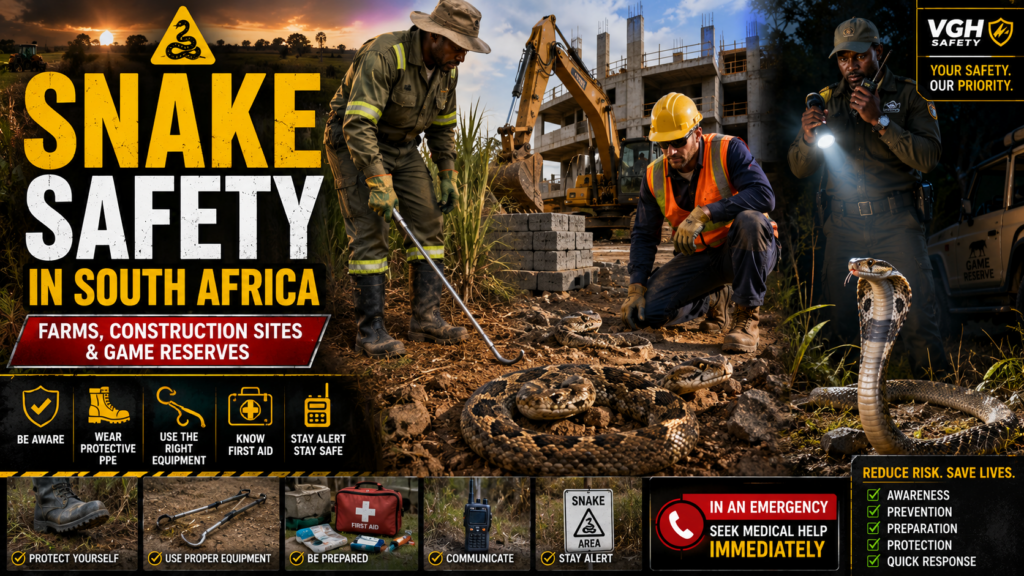
South Africa is home to some of the world’s most dangerous venomous snakes. For farmers, construction workers, security personnel, game reserve staff, outdoor contractors, and rural property owners, snake encounters are a very real workplace hazard.
Every year, workers across South Africa encounter snakes while:
- Walking through long grass
- Working near building materials
- Conducting security patrols
- Operating machinery
- Clearing vegetation
- Working on farms
- Guiding tourists in game reserves
In many cases, snake bites occur because workers panic, attempt unsafe snake handling, or fail to notice a snake hidden in vegetation, debris, trenches, or dark areas.
A single snake bite can result in:
- Severe injury
- Permanent tissue damage
- Paralysis
- Hospitalisation
- Fatalities
- Operational disruptions
- Legal liability
Snake safety South Africa has therefore become an increasingly important part of workplace safety planning for businesses operating in outdoor and rural environments.
This guide explains how to reduce snake-related risks, improve outdoor worker safety, implement effective snake awareness training, and safely respond to snake encounters in South African workplaces.
Table of Contents
- Why Snake Safety Matters in South Africa
- Common Venomous Snakes in South Africa
- Puff Adder Safety
- Black Mamba Safety
- Cape Cobra Safety
- Boomslang Dangers
- Mozambique Spitting Cobra Risks
- Industries Most at Risk
- Snake Encounters on Farms
- Snake Hazards on Construction Sites
- Snake Risks in Game Reserves and Tourism
- Snake Safety for Security Personnel
- Understanding Snake Behaviour
- Common Snake Encounter Mistakes
- How to Avoid Snake Bites
- PPE Recommendations for Snake-Prone Environments
- Protective Boots and Gaiters
- Gloves and Outdoor PPE
- Safe Walking Procedures in Rural Areas
- Night-Time Outdoor Safety
- Workplace Snake Awareness Training
- What to Do if a Snake Is Spotted
- Safe Snake Removal Procedures
- Snake Handling Equipment Explained
- Snake Bite First Aid Procedures
- What NOT to Do After a Snake Bite
- Emergency Response Planning
- Vehicle and Camp Safety
- Load Shedding and Snake Activity Risks
- Heat and Seasonal Snake Behaviour
- Child and Visitor Safety on Rural Properties
- Common Myths About Snakes
- Legal and Environmental Considerations
- Real-World South African Snake Encounter Scenarios
- Reducing Liability and Improving Outdoor Safety
- Frequently Asked Questions
- Final Thoughts
Why Snake Safety Matters in South Africa
South Africa’s warm climate and diverse ecosystems create ideal conditions for snakes.
Snakes are commonly found in:
- Farms
- Construction sites
- Nature reserves
- Rural properties
- Industrial yards
- Warehouses
- Agricultural facilities
Many workplace snake encounters occur because:
- Workers cannot see snakes hidden in vegetation
- Construction debris creates shelter for snakes
- Outdoor workers operate at night
- Load shedding reduces visibility
- Workers lack snake awareness training
Snake safety South Africa strategies help businesses:
- Protect workers
- Reduce injuries
- Improve emergency response
- Reduce liability
- Improve outdoor workplace safety
Common Venomous Snakes in South Africa
South Africa has several highly venomous snake species.
Common Dangerous Snakes Include
- Puff adder
- Black mamba
- Cape cobra
- Boomslang
- Mozambique spitting cobra
Understanding snake behaviour and identification improves workplace preparedness.
Puff Adder Safety
The puff adder is responsible for many snake bites in South Africa.
Puff Adder Risks
Puff adders:
- Camouflage extremely well
- Often remain motionless
- Rely on concealment rather than escape
Workers frequently step on puff adders accidentally.
Puff Adder Bite Symptoms
- Severe swelling
- Tissue damage
- Intense pain
- Bleeding complications
Puff Adder Prevention Tips
- Wear protective boots
- Avoid long grass
- Use lighting at night
- Stay alert in bushy areas
Black Mamba Safety
The black mamba is one of Africa’s most feared snakes.
Black Mamba Risks
Black mambas:
- Move extremely quickly
- Defend aggressively if cornered
- Deliver highly toxic venom
Black Mamba Bite Symptoms
- Paralysis
- Breathing difficulty
- Rapid symptom progression
Immediate medical treatment is critical.
Black Mamba Prevention
Workers should:
- Avoid provoking snakes
- Keep distance
- Report sightings immediately
Cape Cobra Safety
Cape cobras are highly venomous and commonly found in many South African regions.
Cape Cobra Risks
Cape cobras may:
- Enter buildings
- Seek warmth near structures
- Appear near farms and settlements
Prevention Measures
- Maintain clean surroundings
- Seal building gaps
- Reduce rodent populations
Boomslang Dangers
Boomslangs are tree-dwelling snakes with highly dangerous venom.
Boomslang Risks
Boomslangs:
- Often remain hidden in vegetation
- May be encountered during tree clearing or farming activities
Bite Symptoms
- Internal bleeding
- Delayed symptoms
- Severe blood clotting issues
Medical treatment should never be delayed after suspected boomslang bites.
Mozambique Spitting Cobra Risks
Mozambique spitting cobras create additional risks because they can spit venom toward the eyes.
Risks Include
- Eye injuries
- Temporary blindness
- Severe pain
Prevention Tips
Workers should:
- Wear eye protection
- Avoid approaching snakes
- Wash eyes immediately if exposed
Industries Most at Risk
Certain industries face increased snake exposure.
High-Risk Industries Include
- Agriculture
- Construction
- Security
- Tourism
- Wildlife management
- Forestry
- Municipal maintenance
Snake safety South Africa protocols are especially important in rural and outdoor workplaces.
Snake Encounters on Farms
Farms provide ideal environments for snakes due to:
- Water sources
- Rodents
- Vegetation
- Animal feed storage
Farm Snake Risks Include
- Barn encounters
- Snake bites during harvesting
- Encounters near irrigation systems
- Night-time snake activity
Farm Safety Measures
Farm workers should:
- Wear protective boots
- Avoid reaching into hidden spaces
- Use lighting during night work
- Keep vegetation controlled
Snake Hazards on Construction Sites
Construction sites often attract snakes due to:
- Debris piles
- Trenches
- Building materials
- Disturbed ground
Common Construction Risks Include
- Snakes hiding under equipment
- Encounters inside trenches
- Snake bites during clearing operations
Construction Safety Recommendations
- Inspect work areas daily
- Remove debris regularly
- Use PPE consistently
- Train workers on snake awareness
Snake Risks in Game Reserves and Tourism
Game reserves and outdoor tourism environments naturally increase snake exposure.
Common Risks Include
- Walking trails
- Campsites
- Vehicle maintenance areas
- Staff accommodation
Outdoor Safety Measures
Game reserve staff should:
- Carry communication devices
- Use snake awareness protocols
- Maintain emergency response plans
Snake Safety for Security Personnel
Security officers often patrol:
- Rural properties
- Industrial facilities
- Farms
- Outdoor areas at night
These conditions increase snake encounter risks.
Security Safety Measures
Security personnel should use:
- High-lumen flashlights
- Protective boots
- Communication radios
- Reflective PPE
Understanding Snake Behaviour
Most snakes prefer avoiding humans.
Snakes usually bite when:
- Surprised
- Cornered
- Stepped on
- Provoked
Understanding snake behaviour helps reduce panic and unsafe reactions.
Common Snake Encounter Mistakes
Attempting to Kill the Snake
Many bites occur when people try to kill snakes.
Approaching Too Closely
Workers often underestimate striking distance.
Reaching Into Hidden Areas
Snakes commonly hide:
- Under debris
- Inside pipes
- Beneath equipment
- In vegetation
Panicking
Panic increases poor decision-making and injury risks.
How to Avoid Snake Bites
Avoid Walking Through Long Grass
Use clear pathways where possible.
Use Proper Lighting
Night-time visibility is essential.
Stay Alert
Workers should remain aware of surroundings.
Avoid Handling Snakes
Only trained personnel should attempt snake removal.
Maintain Clean Work Areas
Debris and clutter attract rodents and snakes.
PPE Recommendations for Snake-Prone Environments
PPE significantly reduces snake bite risks.
Recommended PPE Includes
- Protective boots
- Snake gaiters
- Gloves
- Long trousers
- Eye protection
- High-visibility clothing
Protective Boots and Gaiters
Strong protective footwear helps reduce lower-leg bite injuries.
Recommended Features Include
- Thick materials
- High ankle support
- Puncture resistance
Snake gaiters provide additional lower-leg protection.
Gloves and Outdoor PPE
Gloves reduce injury risks during:
- Vegetation clearing
- Equipment handling
- Outdoor maintenance
Workers should avoid placing hands into hidden spaces without inspection.
Safe Walking Procedures in Rural Areas
Workers should:
- Walk carefully
- Avoid stepping over logs blindly
- Use flashlights at night
- Watch where they place hands and feet
Night-Time Outdoor Safety
Many snakes become more active at night.
Night Safety Recommendations
- Use strong lighting
- Avoid walking alone
- Wear reflective PPE
- Maintain communication devices
Load shedding further increases night-time risks.
Workplace Snake Awareness Training
Training improves worker confidence and safety.
Training Should Include
- Snake identification
- Safe response procedures
- Emergency communication
- First aid procedures
- PPE requirements
Regular refresher training improves preparedness.
What to Do if a Snake Is Spotted
Stay Calm
Do not panic or provoke the snake.
Keep Distance
Move workers away safely.
Secure the Area
Prevent others from approaching.
Contact Qualified Snake Handlers
Only trained professionals should remove snakes.
Safe Snake Removal Procedures
Snake removal should only be performed by trained personnel using proper equipment.
Safe Removal Requires
- Snake hooks
- Snake tongs
- Protective PPE
- Controlled handling techniques
Untrained workers should never attempt capture.
Snake Handling Equipment Explained
Proper snake handling equipment improves safety significantly.
Common Equipment Includes
- Snake hooks
- Snake tongs
- Snake bags
- Protective gloves
- Transport containers
Businesses operating in snake-prone areas should maintain emergency snake handling equipment.
Snake Bite First Aid Procedures
Immediate first aid improves survival outcomes.
Snake Bite First Aid Steps
- Stay calm
- Move away from the snake
- Keep the victim still
- Remove tight jewellery
- Seek emergency medical assistance immediately
Important Safety Advice
- Immobilise the affected limb
- Reduce movement
- Monitor breathing
What NOT to Do After a Snake Bite
Do NOT
- Cut the wound
- Suck out venom
- Apply ice
- Use tourniquets
- Attempt home remedies
- Delay medical treatment
These actions may worsen injuries.
Emergency Response Planning
Businesses operating in outdoor environments should maintain snake emergency plans.
Emergency Plans Should Include
- Emergency contact numbers
- Nearest medical facilities
- Communication procedures
- Snake bite first aid kits
- Staff responsibilities
Vehicle and Camp Safety
Snakes may enter:
- Camps
- Vehicles
- Containers
- Equipment storage areas
Safety Tips Include
- Inspect vehicles regularly
- Keep doors closed
- Avoid food waste buildup
- Maintain clean campsites
Load Shedding and Snake Activity Risks
Load shedding creates additional snake hazards.
Risks Include
- Reduced visibility
- Increased night-time encounters
- Security patrol exposure
- Limited emergency communication
Workers operating during outages should use additional lighting and PPE.
Heat and Seasonal Snake Behaviour
Snakes become more active during warmer months.
Increased Snake Activity Occurs During
- Summer
- Heatwaves
- Rainy seasons
Businesses should increase awareness training during high-risk periods.
Child and Visitor Safety on Rural Properties
Visitors and children may not recognise snake dangers.
Safety Measures Include
- Safety briefings
- Restricted access areas
- Supervision
- Warning signage
Common Myths About Snakes
Myth: All Snakes Are Aggressive
Most snakes avoid human interaction.
Myth: Small Snakes Are Harmless
Juvenile venomous snakes remain dangerous.
Myth: Killing Snakes Improves Safety
Attempting to kill snakes often increases bite risks.
Legal and Environmental Considerations
Many snake species are protected under environmental regulations.
Businesses should:
- Avoid unnecessary killing
- Use professional snake handlers
- Follow wildlife regulations
Real-World South African Snake Encounter Scenarios
Scenario 1: Farm Worker Bitten in Long Grass
A worker walks through tall vegetation without protective boots.
The worker accidentally steps on a puff adder.
Protective PPE and safer walking procedures would have reduced the risk.
Scenario 2: Construction Site Snake Encounter
Workers discover a snake beneath building materials during excavation work.
Panic causes unsafe movement near machinery.
Proper snake awareness training would have improved response procedures.
Scenario 3: Security Patrol During Load Shedding
A security officer patrolling during a blackout nearly steps on a Mozambique spitting cobra.
High-lumen flashlights and protective footwear improve safety significantly.
Reducing Liability and Improving Outdoor Safety
Strong snake safety South Africa strategies help businesses:
- Protect workers
- Reduce injuries
- Improve emergency preparedness
- Reduce legal liability
- Improve operational safety
Businesses operating outdoors should:
- Train workers
- Maintain PPE
- Implement snake awareness programmes
- Conduct risk assessments
Why Businesses Should Work With Outdoor Safety Specialists
Managing snake risks requires:
- Proper training
- Reliable PPE
- Snake handling equipment
- Emergency preparedness
VGH Safety provides outdoor workplace safety solutions including:
- Snake handling equipment
- Protective PPE
- Emergency safety products
- Workplace safety support
Whether operating farms, construction sites, game reserves, or outdoor facilities, proactive snake safety planning improves worker protection and operational resilience.
Frequently Asked Questions
What is the most dangerous snake in South Africa?
Several snakes are highly dangerous, including:
- Black mamba
- Cape cobra
- Puff adder
- Mozambique spitting cobra
What should you do if you see a snake?
- Stay calm
- Keep distance
- Move people away
- Contact trained snake handlers
Are snake bites common on farms?
Yes. Farms are high-risk environments due to vegetation, rodents, and outdoor work conditions.
What PPE helps prevent snake bites?
Recommended PPE includes:
- Protective boots
- Snake gaiters
- Gloves
- Long trousers
What should you never do after a snake bite?
Never:
- Cut the wound
- Suck out venom
- Use tourniquets
- Delay medical treatment
Final Thoughts
Snake encounters remain a serious workplace hazard across many South African industries. Farms, construction sites, game reserves, rural properties, and outdoor workplaces all face increasing snake-related risks due to environmental conditions, outdoor operations, and changing weather patterns.
Without proper training, PPE, and emergency planning, snake encounters can result in severe injuries, fatalities, operational disruptions, and legal liability.
A proactive snake safety South Africa strategy should include:
- Worker awareness training
- PPE compliance
- Emergency response procedures
- Snake handling equipment
- Outdoor safety inspections
Businesses that prioritise outdoor worker safety improve:
- Worker confidence
- Emergency preparedness
- Compliance
- Operational safety
VGH Safety provides workplace safety solutions designed for demanding South African outdoor environments, helping businesses improve snake awareness, emergency preparedness, PPE management, and overall outdoor safety performance.