
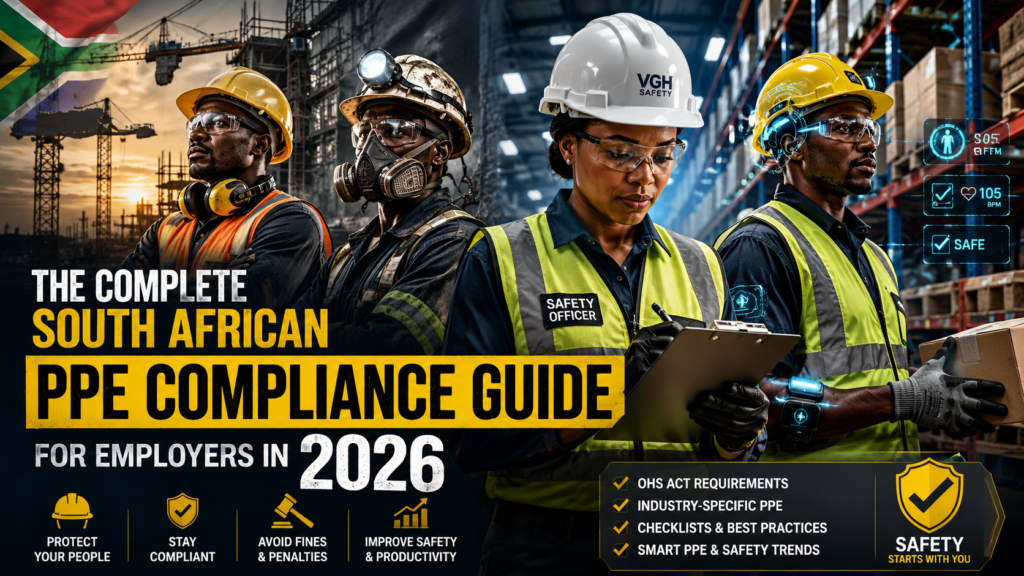
PPE Compliance South Africa: Everything Employers Need to Know
Workplace injuries, preventable accidents, and Occupational Health and Safety violations continue to cost South African businesses millions of rand every year. From construction sites and warehouses to farms, factories, and mining operations, failing to follow proper PPE compliance South Africa standards can result in severe injuries, productivity losses, legal action, reputational damage, and even business shutdowns.
According to global workplace safety statistics, thousands of workplace injuries occur daily due to inadequate personal protective equipment, insufficient training, or poor hazard management. In South Africa, the Occupational Health and Safety Act places a legal duty on employers to provide suitable PPE and ensure workers are adequately protected from workplace hazards.
Yet many businesses still:
- Use incorrect PPE
- Fail to train workers properly
- Ignore PPE inspection schedules
- Use expired safety equipment
- Lack documented compliance procedures
- Struggle to keep up with changing workplace safety regulations South Africa requirements
This comprehensive guide explains everything employers need to know about PPE compliance South Africa in 2026, including legal responsibilities, industry-specific PPE requirements, workplace risk assessments, training obligations, and modern safety trends shaping the future of workplace protection.
Table of Contents
- What Is PPE Compliance South Africa?
- Understanding the OHS Act PPE Requirements
- Employer Responsibilities for PPE Compliance
- Employee Responsibilities Regarding PPE
- Industries That Require Mandatory PPE
- Main Categories of PPE
- How to Conduct a PPE Risk Assessment
- PPE Training Requirements
- PPE Maintenance and Replacement
- PPE Record Keeping and Documentation
- Common PPE Compliance Mistakes
- Penalties for Non-Compliance
- PPE and Workplace Productivity
- PPE Trends for 2026
- Smart PPE and Wearable Safety Technology
- Industry-Specific PPE Recommendations
- South African Workplace Hazards
- PPE Compliance Checklist
- Frequently Asked Questions
- Final Thoughts
What Is PPE Compliance South Africa?
PPE compliance South Africa refers to the proper implementation, use, management, and maintenance of Personal Protective Equipment in accordance with South African occupational health and safety laws.
PPE includes equipment and clothing designed to protect workers from:
- Physical injuries
- Chemical exposure
- Electrical hazards
- Biological hazards
- Respiratory risks
- Noise exposure
- Heat stress
- Falling objects
- Slips and falls
Personal protective equipment forms a critical component of workplace hazard control systems. While engineering controls and safe operating procedures remain essential, PPE acts as the final barrier between workers and potentially life-threatening hazards.
Under workplace safety regulations South Africa, employers must:
- Identify hazards
- Assess risks
- Provide suitable PPE
- Train employees
- Monitor PPE use
- Replace damaged equipment
- Maintain compliance records
Understanding the OHS Act PPE Requirements
The Occupational Health and Safety Act (OHS Act) governs workplace safety standards in South Africa. The legislation requires employers to create and maintain a working environment that is safe and without risk to employee health.
Under OHS Act PPE requirements, employers must:
- Provide appropriate PPE at no cost to employees
- Ensure PPE is suitable for identified hazards
- Train employees on proper PPE use
- Maintain PPE in good condition
- Replace defective or expired equipment
- Enforce PPE policies consistently
Failure to comply with PPE laws South Africa can lead to:
- Department of Labour investigations
- Compliance notices
- Heavy fines
- Criminal liability
- Compensation claims
- Work stoppages
PPE compliance South Africa is therefore not simply a recommendation — it is a legal requirement.
Employer Responsibilities for PPE Compliance
Employers carry the primary responsibility for workplace PPE compliance.
Employers Must Conduct Hazard Assessments
Before selecting PPE, employers must identify:
- Physical hazards
- Chemical hazards
- Environmental hazards
- Machinery risks
- Electrical risks
- Respiratory risks
Each workplace requires a tailored approach.
Employers Must Supply Suitable PPE
PPE must:
- Meet South African safety standards
- Fit workers properly
- Match the specific hazard
- Be durable and functional
- Remain comfortable enough for prolonged use
Providing low-quality or inappropriate PPE may still constitute non-compliance.
Employers Must Train Employees
Training should include:
- Proper PPE use
- Limitations of equipment
- Inspection procedures
- Cleaning procedures
- Storage requirements
- Replacement schedules
Workers must understand why PPE matters and how improper use creates danger.
Employers Must Monitor Compliance
Simply issuing PPE is not enough.
Employers should:
- Conduct inspections
- Monitor PPE use
- Address unsafe behaviour
- Enforce disciplinary measures when necessary
- Update policies regularly
Consistent enforcement is essential for PPE compliance South Africa.
Employee Responsibilities Regarding PPE
Employees also have legal responsibilities under occupational health and safety South Africa regulations.
Workers must:
- Wear PPE correctly
- Follow safety procedures
- Report damaged PPE
- Participate in training
- Avoid misuse of equipment
- Maintain issued PPE responsibly
Ignoring PPE policies can place both the individual worker and co-workers at risk.
Industries That Require Mandatory PPE
Construction
Construction environments expose workers to:
- Falling debris
- Dust inhalation
- Noise hazards
- Electrical risks
- Fall hazards
Common PPE includes:
- Hard hats
- Safety boots
- Fall arrest systems
- Dust masks
- High-visibility clothing
Mining
Mining operations require advanced PPE due to:
- Underground hazards
- Explosive environments
- Respiratory risks
- Heavy machinery
Mining PPE often includes:
- Respirators
- Flame-resistant clothing
- Hearing protection
- Gas detection devices
Warehousing and Logistics
Warehouse workers face:
- Forklift hazards
- Slipping risks
- Falling inventory
- Manual handling injuries
Recommended PPE includes:
- Steel-toe footwear
- Gloves
- Reflective vests
- Back support protection
Agriculture
Agricultural environments expose workers to:
- Chemicals
- Snake encounters
- Heat stress
- Machinery hazards
PPE requirements may include:
- Chemical-resistant gloves
- Respirators
- UV-protective clothing
- Gumboots
Manufacturing
Factories require protection against:
- Machinery injuries
- Sparks
- Sharp materials
- Noise exposure
Typical manufacturing PPE includes:
- Face shields
- Gloves
- Hearing protection
- Protective overalls
Security Industry
Security officers often require:
- High-visibility clothing
- Weather-resistant gear
- Protective footwear
- Tactical safety equipment
Main Categories of PPE
Head Protection
Hard hats protect workers from:
- Falling objects
- Electrical contact
- Impact injuries
Hard hats should be regularly inspected for:
- Cracks
- UV degradation
- Loose suspension systems
Eye Protection
Eye injuries remain common in industrial environments.
Protective eyewear includes:
- Safety glasses
- Chemical splash goggles
- Welding shields
- Face shields
Respiratory Protection
Respiratory hazards are common in:
- Mining
- Construction
- Agriculture
- Manufacturing
Respiratory PPE may include:
- Dust masks
- Half-mask respirators
- Full-face respirators
- Powered air-purifying respirators
Hand Protection
Gloves should match the hazard type:
- Chemical-resistant gloves
- Cut-resistant gloves
- Heat-resistant gloves
- Electrical gloves
Using the wrong glove type can increase injury risk.
Foot Protection
Safety footwear protects against:
- Crushing injuries
- Punctures
- Slips
- Electrical hazards
Steel-toe and composite-toe safety boots remain essential for many industries.
Hearing Protection
Long-term noise exposure can cause permanent hearing loss.
Common hearing protection includes:
- Earplugs
- Earmuffs
- Electronic hearing protection
Fall Protection
Fall arrest systems are critical for:
- Roofing
- Scaffolding
- Elevated construction work
Equipment may include:
- Harnesses
- Lifelines
- Lanyards
- Anchor systems
High-Visibility Clothing
High-vis clothing improves visibility in:
- Roadworks
- Warehouses
- Construction zones
- Security environments
How to Conduct a Workplace PPE Risk Assessment
Effective PPE compliance South Africa begins with risk assessment.
Step 1: Identify Hazards
Inspect:
- Equipment
- Chemicals
- Environmental conditions
- Work procedures
Step 2: Determine Exposure Risks
Consider:
- Frequency of exposure
- Severity of hazards
- Number of workers affected
Step 3: Select Appropriate PPE
Choose PPE based on:
- Risk level
- Industry standards
- Employee comfort
- Environmental conditions
Step 4: Train Employees
Workers should understand:
- Why PPE is required
- How to wear it
- How to inspect it
Step 5: Monitor and Review
Risk assessments should be updated regularly, especially after:
- Incidents
- Operational changes
- New equipment installations
PPE Training Requirements
Training is one of the most overlooked aspects of workplace PPE compliance.
Training should cover:
- Correct fitting procedures
- Equipment limitations
- Emergency procedures
- Maintenance practices
- Storage methods
Refresher training should occur:
- Annually
- After incidents
- When new PPE is introduced
PPE Maintenance and Replacement
Damaged PPE creates a false sense of security.
PPE Inspection Checklist
Inspect PPE for:
- Cracks
- Tears
- Expired filters
- Broken straps
- Corrosion
- UV damage
Replacement Guidelines
Replace PPE:
- After impact damage
- When expired
- If contaminated
- If improperly stored
- If no longer compliant with standards
PPE Record Keeping and Documentation
Proper documentation supports PPE compliance South Africa requirements.
Important records include:
- PPE issue registers
- Training attendance
- Inspection logs
- Risk assessments
- Incident reports
- Maintenance schedules
Digital record keeping is becoming increasingly important in 2026.
Common PPE Compliance Mistakes South African Businesses Make
Using Incorrect PPE
Many employers choose PPE based solely on price rather than hazard suitability.
Ignoring Heat Stress
South African outdoor workers often struggle with:
- High temperatures
- Dehydration
- UV exposure
Employers should select breathable PPE where possible.
Poor PPE Storage
Improper storage causes:
- Moisture damage
- UV degradation
- Contamination
Lack of Training
Untrained workers may:
- Wear PPE incorrectly
- Remove PPE unnecessarily
- Ignore inspection procedures
Failure to Replace Expired PPE
Expired PPE may fail during emergencies.
Penalties and Risks of Non-Compliance
Failure to follow PPE laws South Africa can result in:
Financial Penalties
- Regulatory fines
- Legal fees
- Compensation claims
- Increased insurance costs
Operational Disruption
- Shutdown notices
- Project delays
- Productivity losses
Reputational Damage
Safety failures can severely damage client trust and business reputation.
How PPE Improves Productivity and Reduces Liability
Strong PPE compliance South Africa strategies improve:
- Employee morale
- Operational efficiency
- Staff retention
- Workplace confidence
Safe employees are generally:
- More productive
- More focused
- Less likely to take sick leave
Reducing workplace incidents also lowers:
- Compensation claims
- Insurance costs
- Downtime
PPE Trends for 2026
Modern workplace safety continues evolving rapidly.
Key trends include:
- Smart PPE
- AI-driven safety monitoring
- Wearable sensors
- Digital compliance tracking
- Ergonomic PPE designs
- Eco-friendly safety materials
Smart PPE and Wearable Safety Technology
Smart PPE can now:
- Monitor fatigue
- Detect gas exposure
- Track worker location
- Monitor heart rate
- Detect falls
Examples include:
- Smart helmets
- Connected respirators
- Wearable gas monitors
- GPS-enabled safety vests
These technologies are increasingly relevant in mining, construction, and industrial sectors.
Industry-Specific PPE Recommendations
Construction PPE Recommendations
Recommended PPE:
- Hard hats
- Harnesses
- Dust masks
- Reflective clothing
- Safety boots
Mining PPE Recommendations
Recommended PPE:
- Flame-resistant overalls
- Respirators
- Hearing protection
- Headlamps
Warehousing PPE Recommendations
Recommended PPE:
- Steel-toe boots
- Gloves
- Reflective vests
Agriculture PPE Recommendations
Recommended PPE:
- Chemical-resistant gloves
- Sun-protective clothing
- Respirators
Security Industry PPE Recommendations
Recommended PPE:
- High-vis jackets
- Weather-resistant footwear
- Communication headsets
South African Workplace Hazards Employers Must Consider
Heat Stress
Outdoor workers face serious heat-related risks during South African summers.
Employers should:
- Encourage hydration
- Schedule rest breaks
- Provide cooling PPE where possible
Dust Exposure
Dust remains a major issue in:
- Construction
- Mining
- Agriculture
Respiratory protection is critical.
UV Exposure
Long-term UV exposure increases:
- Skin cancer risk
- Fatigue
- Heat exhaustion
Load Shedding Hazards
Power outages create:
- Reduced visibility
- Increased security risks
- Generator hazards
- Emergency evacuation challenges
Employers should maintain emergency lighting and backup safety systems.
Workplace PPE Checklist
PPE Compliance Checklist for South African Businesses
Risk Assessment
- Conduct workplace hazard assessments
- Review assessments regularly
PPE Selection
- Choose industry-appropriate PPE
- Verify safety certifications
Training
- Train all employees
- Conduct refresher courses
Maintenance
- Inspect PPE regularly
- Replace damaged equipment
Documentation
- Maintain compliance records
- Track PPE issuance
Enforcement
- Monitor PPE use
- Enforce safety procedures consistently
Why Businesses Should Partner With Professional PPE Suppliers
Working with experienced PPE suppliers helps businesses:
- Stay compliant
- Reduce liability
- Access certified equipment
- Improve worker safety
- Simplify procurement
VGH Safety provides high-quality safety equipment solutions tailored to South African workplace conditions and industry requirements.
Whether your business operates in construction, warehousing, agriculture, security, or manufacturing, selecting the correct PPE is critical for maintaining compliance and protecting workers.
Frequently Asked Questions
What does PPE compliance South Africa mean?
PPE compliance South Africa refers to following workplace safety laws and ensuring employees use appropriate personal protective equipment correctly.
Is PPE mandatory for employers in South Africa?
Yes. Under the Occupational Health and Safety Act, employers must provide suitable PPE where workplace hazards exist.
Who pays for PPE in South Africa?
Employers are responsible for supplying required PPE at no cost to employees.
How often should PPE be replaced?
Replacement depends on:
- Manufacturer guidelines
- Exposure conditions
- Wear and tear
- Damage
- Expiry dates
What industries require PPE?
Industries commonly requiring PPE include:
- Construction
- Mining
- Warehousing
- Manufacturing
- Agriculture
- Security
Final Thoughts
PPE compliance South Africa is no longer simply about meeting minimum legal requirements. In 2026, workplace safety has become a critical operational priority that directly impacts productivity, liability, employee wellbeing, and business reputation.
Employers who invest in proper PPE programmes benefit from:
- Fewer workplace injuries
- Better employee morale
- Reduced downtime
- Improved compliance
- Stronger operational resilience
From conducting proper risk assessments to implementing modern smart PPE solutions, businesses must take a proactive approach to workplace safety.
VGH Safety helps South African businesses source reliable, industry-compliant PPE solutions tailored for local working conditions. Whether you need respiratory protection, safety footwear, high-visibility clothing, or specialised industrial safety equipment, having the right partner makes compliance significantly easier.
Protect your workforce. Reduce your risk. Strengthen your compliance strategy.