
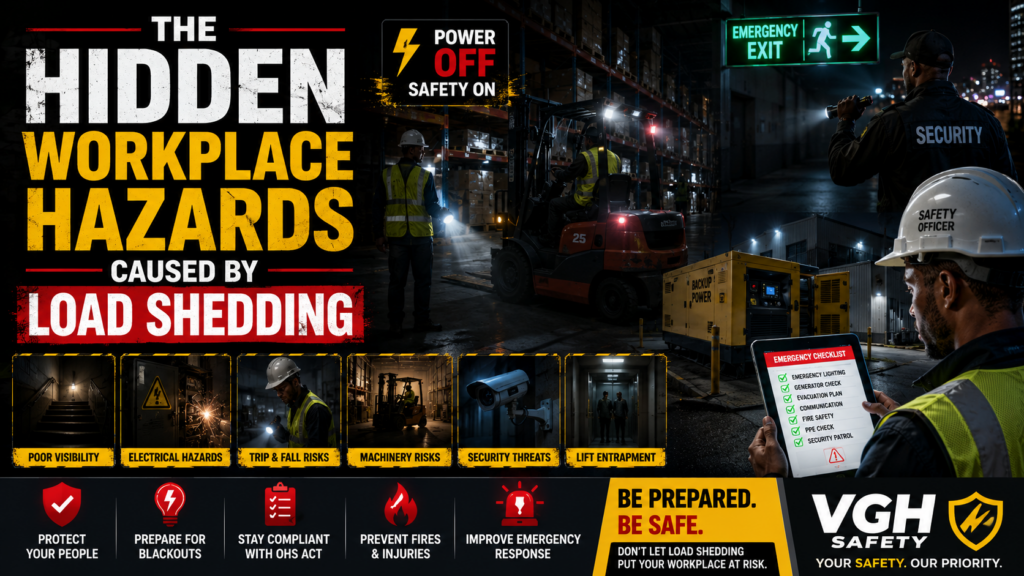
Load shedding has become one of the biggest operational and safety challenges facing South African businesses. While many companies focus on lost productivity and downtime, the hidden workplace hazards caused by power outages are often overlooked.
From warehouses and construction sites to factories, farms, retail centres, and office parks, sudden power interruptions create dangerous working conditions that increase the risk of injuries, fires, equipment failures, security breaches, and operational disruptions.
When the power goes out unexpectedly:
- Emergency lighting may fail
- Machinery may shut down dangerously
- Workers can become trapped in lifts
- Security systems may stop functioning
- Visibility drops instantly
- Electrical systems become unstable
- Backup generators introduce additional hazards
For South African businesses, load shedding workplace safety is no longer optional. It is now a critical part of workplace risk management and Occupational Health and Safety compliance.
This guide explores the major safety risks caused by load shedding and explains how businesses can improve emergency preparedness, workplace resilience, employee safety, and operational continuity during power outages.
Why Load Shedding Creates Workplace Safety Risks
Modern workplaces depend heavily on stable electricity systems. When power fails suddenly, multiple safety systems may stop functioning at the same time.
This creates:
- Reduced visibility
- Emergency communication failures
- Security vulnerabilities
- Unsafe machinery conditions
- Increased panic and confusion
- Evacuation challenges
Load shedding workplace safety risks affect nearly every industry in South Africa.
Without proper preparation, even short power outages can lead to serious incidents.
Common Workplace Accidents During Power Outages
Slips, Trips, and Falls
Poor lighting during outages increases the risk of:
- Falling down staircases
- Tripping over equipment
- Walking into obstacles
- Slipping on warehouse floors
Warehouses and industrial facilities become especially dangerous during blackouts.
Machinery Injuries
Machinery may:
- Stop unexpectedly
- Restart without warning
- Lose safety functionality
- Cause instability in production environments
Workers operating machinery during outages face significant risks.
Electrical Shock Hazards
Power interruptions and restoration can create:
- Voltage spikes
- Damaged circuits
- Exposed electrical faults
- Electrical fires
Electrical systems become unstable during load shedding.
Panic-Related Injuries
Sudden darkness may cause panic in:
- Retail centres
- Factories
- Public facilities
- Office environments
Poor emergency planning often worsens these situations.
Security Incidents
Power outages frequently increase:
- Theft
- Trespassing
- Vandalism
- Opportunistic crime
Businesses with poor backup security systems become highly vulnerable.
South African OHS Responsibilities During Load Shedding
Under South Africa’s Occupational Health and Safety Act, employers are legally required to provide a workplace that is safe and without risk to employees.
These responsibilities remain in effect during load shedding.
Employers must:
- Conduct workplace risk assessments
- Maintain emergency lighting
- Train workers for emergencies
- Maintain safe evacuation procedures
- Ensure machinery safety
- Provide suitable PPE
- Maintain backup systems safely
Businesses that fail to prepare for predictable power outages may face:
- Compliance penalties
- Compensation claims
- Legal liability
- Operational shutdowns
Load shedding workplace safety planning should form part of every company’s workplace safety strategy.
Generator Safety South Africa Best Practices
Generators have become essential for many South African businesses. However, generators also introduce serious workplace hazards if not managed properly.
Generator Placement
Generators should:
- Operate outdoors
- Remain in ventilated areas
- Stay away from entrances and windows
- Be protected from rain and flooding
Improper generator placement creates serious health and fire risks.
Generator Maintenance
Routine maintenance should include:
- Oil inspections
- Electrical testing
- Fuel checks
- Battery testing
- Ventilation inspections
Poorly maintained generators become dangerous during prolonged outages.
Generator Installation
Improper installation may cause:
- Electrical backfeeding
- Equipment damage
- Fire hazards
- Electrocution risks
Only qualified electricians should install backup power systems.
Carbon Monoxide Risks From Generators
One of the most dangerous load shedding workplace safety hazards is carbon monoxide poisoning.
Generators produce carbon monoxide gas which:
- Has no smell
- Cannot be seen
- Causes dizziness
- Leads to confusion
- Can become fatal
Warning Signs of Carbon Monoxide Exposure
Symptoms include:
- Headaches
- Nausea
- Fatigue
- Dizziness
- Confusion
Businesses should install carbon monoxide detectors near generator areas.
Fire Hazards Caused by Backup Power Systems
Generators, inverters, overloaded circuits, and battery systems increase workplace fire risks during load shedding.
Common Causes of Electrical Fires
- Faulty wiring
- Overloaded plugs
- Battery overheating
- Fuel leaks
- Poor ventilation
- Improper extension cord use
Fire Prevention Strategies
Businesses should:
- Conduct electrical inspections
- Maintain fire extinguishers
- Install surge protection
- Inspect battery systems
- Store fuel safely
Emergency Lighting Requirements
Emergency lighting is critical during power outages.
Without proper emergency lighting:
- Workers may panic
- Emergency exits become difficult to locate
- Stairwells become hazardous
- Evacuations slow down
Emergency Lighting Should Cover
- Staircases
- Emergency exits
- Production areas
- Warehouses
- Parking areas
- Security zones
Battery-powered emergency lighting systems should be tested regularly.
Workplace Evacuation Procedures During Blackouts
Every workplace should have a documented emergency evacuation plan for power outages.
Evacuation Plans Should Include
- Exit routes
- Assembly points
- Staff responsibilities
- Visitor management procedures
- Emergency communication systems
Businesses Should Conduct
- Emergency drills
- Blackout simulations
- Staff emergency training
Workers should know exactly what to do during sudden outages.
Security Risks During Power Outages
Load shedding significantly increases workplace security risks.
Common Security Risks Include
- Theft
- Trespassing
- Break-ins
- Vandalism
Businesses Should Improve
- Backup lighting
- CCTV battery backup
- Access control systems
- Security patrol procedures
- Perimeter security
Security staff require additional PPE and communication tools during outages.
Electrical Hazards When Power Returns
Power restoration often creates dangerous electrical instability.
Common Electrical Risks Include
- Voltage surges
- Equipment damage
- Electrical fires
- Unexpected machinery restarts
Safe Restart Procedures
Businesses should:
- Inspect systems before restart
- Shut down sensitive equipment safely
- Use surge protection systems
- Train staff on restart procedures
Equipment Failure and Machinery Restart Risks
Industrial machinery may restart unexpectedly when power returns.
Common Risks Include
- Conveyor belt movement
- Hydraulic instability
- Sudden machine startup
- Production line failures
Lockout and restart procedures are essential for workplace safety.
Cold Storage and Food Safety Risks
Cold storage facilities face major risks during prolonged outages.
Potential Hazards Include
- Food spoilage
- Bacterial growth
- Pharmaceutical damage
- Refrigeration failure
Businesses should:
- Monitor temperatures
- Maintain backup power
- Install temperature alarms
- Create emergency relocation procedures
Warehouse and Logistics Risks During Load Shedding
Warehouses become highly dangerous during blackouts.
Common Risks Include
- Forklift accidents
- Poor visibility
- Trip hazards
- Loading dock incidents
- Security breaches
Warehouse Safety Measures
Businesses should implement:
- Emergency lighting
- Reflective PPE
- Backup communication systems
- Controlled equipment shutdown procedures
Construction Site Safety During Power Outages
Construction sites already contain numerous hazards. Power outages significantly increase these dangers.
Construction Risks Include
- Reduced visibility
- Fall hazards
- Unsafe scaffolding access
- Tool failures
- Electrical instability
Construction Safety Recommendations
Construction companies should:
- Stop high-risk work during outages
- Use portable emergency lighting
- Maintain emergency communication systems
- Secure elevated work areas
Mining and Industrial Risks During Power Interruptions
Mining operations face severe dangers during power failures.
Mining Risks Include
- Ventilation failure
- Lift stoppages
- Gas buildup
- Communication failures
Industrial facilities may also experience:
- Machinery instability
- Chemical process interruptions
- Production failures
Backup safety systems are critical in these environments.
Lift and Elevator Emergency Risks
Employees and visitors becoming trapped in lifts remains a common load shedding issue.
Businesses Should
- Install emergency communication systems
- Maintain lift backup power
- Train emergency response staff
- Conduct lift inspections regularly
Emergency rescue procedures should be clearly documented.
PPE Recommendations During Load Shedding
Proper PPE becomes even more important during blackouts.
Recommended PPE Includes
- High-visibility clothing
- Headlamps
- Reflective gear
- Safety helmets
- Safety boots
- Respiratory protection
- Communication headsets
Security Personnel May Require
- Tactical flashlights
- Protective gloves
- Reflective rainwear
Battery Backup and UPS Safety
Battery systems and UPS units create additional hazards during outages.
Common Risks Include
- Battery overheating
- Electrical fires
- Chemical leaks
- Ventilation issues
Best Practices Include
- Regular inspections
- Proper ventilation
- Temperature monitoring
- Certified installations
Safe Fuel Storage Procedures
Fuel storage becomes increasingly important during prolonged power outages.
Fuel Storage Risks Include
- Fires
- Explosions
- Leaks
- Environmental contamination
Fuel Safety Best Practices
Fuel should be stored:
- In approved containers
- Away from heat sources
- In ventilated areas
- In secure locations
Emergency Communication Planning
Communication failures create confusion during emergencies.
Businesses Should Maintain
- Emergency contact lists
- Two-way radios
- Backup mobile devices
- Communication procedures
Employees should know:
- Who to contact
- Where to assemble
- How to report emergencies
Conducting a Load Shedding Risk Assessment
Every workplace should conduct a dedicated load shedding workplace safety risk assessment.
Risk Assessments Should Evaluate
- Emergency lighting
- Machinery shutdown risks
- Generator safety
- Security vulnerabilities
- Evacuation procedures
- Communication systems
Assessments Should Be Updated
- Regularly
- After incidents
- After operational changes
Staff Training Requirements
Workers should receive blackout emergency training.
Training Should Include
- Evacuation procedures
- Generator hazards
- Fire response
- Emergency communication
- Machinery shutdown procedures
Regular drills improve preparedness and reduce panic.
Workplace Load Shedding Emergency Checklist
Before Outages
- Test emergency lighting
- Inspect generators
- Charge communication devices
- Review evacuation plans
- Check fuel supplies
During Outages
- Stop hazardous operations
- Monitor emergency systems
- Maintain communication
- Secure entry points
After Power Restoration
- Inspect machinery
- Restart systems safely
- Check electrical systems
- Document incidents
Real-World Workplace Scenarios
Scenario 1: Warehouse Forklift Collision
A sudden blackout occurs while forklifts operate inside a warehouse.
Poor visibility causes a collision with shelving infrastructure.
Emergency lighting and shutdown procedures could have prevented the incident.
Scenario 2: Generator Carbon Monoxide Exposure
A generator operates inside a poorly ventilated room.
Workers experience dizziness and nausea due to carbon monoxide buildup.
Proper ventilation and gas monitoring systems would have reduced the risk.
Scenario 3: Construction Site Fall Hazard
Workers remain on scaffolding during a sudden power outage.
Reduced visibility creates a severe fall risk.
Portable emergency lighting and work stoppage protocols should have been implemented immediately.
Smart Safety Technology for 2026
Modern businesses increasingly use smart technology to improve load shedding workplace safety.
Emerging Technologies Include
- Smart emergency lighting
- AI-powered monitoring systems
- Automated generator diagnostics
- IoT-connected safety sensors
- Remote security monitoring
These systems improve:
- Workplace safety
- Emergency response
- Operational continuity
- Compliance tracking
Improving Workplace Resilience During Load Shedding
Businesses that prepare properly experience:
- Fewer workplace incidents
- Improved compliance
- Reduced downtime
- Better employee confidence
Key Strategies Include
- Emergency planning
- Staff training
- PPE readiness
- Backup systems
- Routine inspections
- Digital monitoring systems
Load shedding remains a long-term challenge in South Africa. Businesses that proactively improve workplace safety preparedness will remain more resilient and operationally stable.
Why Businesses Should Work With Workplace Safety Specialists
Managing load shedding workplace safety risks requires:
- Emergency planning
- Proper PPE
- Reliable safety equipment
- Compliance expertise
VGH Safety helps businesses improve workplace preparedness through:
- PPE solutions
- Safety equipment
- Emergency preparedness support
- Workplace compliance assistance
Whether your business operates in construction, warehousing, manufacturing, agriculture, mining, logistics, or retail, proactive safety planning helps protect employees and reduce operational risk.
Frequently Asked Questions
Why is load shedding dangerous for workplaces?
Power outages create:
- Reduced visibility
- Machinery instability
- Security vulnerabilities
- Emergency evacuation risks
Are businesses legally required to prepare for load shedding?
Yes. Employers must provide safe working environments under Occupational Health and Safety regulations.
What is the biggest generator safety risk?
Carbon monoxide poisoning is one of the most dangerous generator-related hazards.
What PPE is recommended during power outages?
Recommended PPE includes:
- High-visibility clothing
- Headlamps
- Safety helmets
- Safety footwear
- Communication equipment
How can businesses improve workplace resilience during load shedding?
Businesses should:
- Conduct risk assessments
- Train employees
- Install emergency systems
- Maintain backup generators
- Improve emergency communication
Final Thoughts
Load shedding has evolved beyond a productivity problem and become a major workplace safety challenge across South Africa.
Power outages create hidden hazards that affect:
- Employee safety
- Security
- Emergency response
- Machinery stability
- Operational continuity
Businesses that fail to prepare for these risks expose themselves to:
- Workplace injuries
- Legal liability
- Regulatory penalties
- Operational disruptions
A proactive load shedding workplace safety strategy should include:
- Emergency planning
- Staff training
- PPE readiness
- Generator safety
- Evacuation procedures
- Backup communication systems
South African businesses that prioritise workplace resilience and emergency preparedness will be better positioned to protect employees, maintain operations, and reduce long-term risk.
VGH Safety provides workplace safety solutions designed for demanding South African conditions, helping businesses improve compliance, emergency preparedness, and worker protection during load shedding and other operational disruptions.