
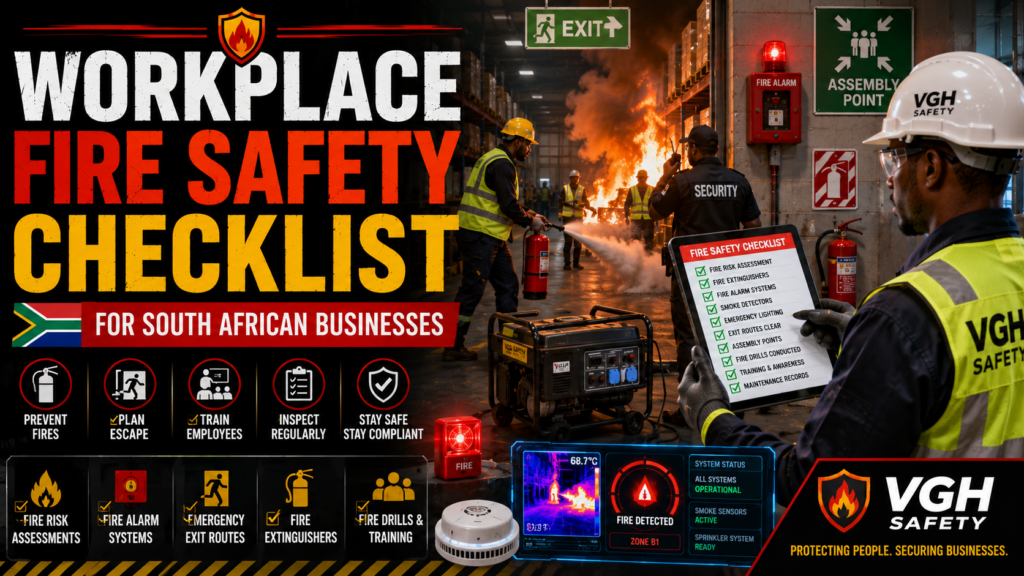
Workplace fires remain one of the most destructive and costly risks facing South African businesses. A single fire incident can result in severe injuries, fatalities, operational shutdowns, equipment loss, legal liability, insurance complications, and devastating financial damage.
From warehouses and factories to shopping centres, office buildings, schools, hospitals, and logistics facilities, fire risks exist in nearly every workplace environment.
Many fires start because of:
- Electrical faults
- Load shedding surges
- Unsafe generators
- Poor housekeeping
- Overloaded circuits
- Chemical storage failures
- Welding activities
- Human negligence
In South Africa, ongoing load shedding and backup power usage have significantly increased workplace fire risks over recent years.
For modern businesses, fire safety South Africa is no longer simply a compliance requirement. It has become a critical operational priority that directly affects:
- Employee safety
- Business continuity
- Insurance costs
- Regulatory compliance
- Operational resilience
- Company reputation
This guide explains everything South African businesses need to know about workplace fire safety, including fire prevention, emergency procedures, fire extinguisher requirements, evacuation planning, and modern fire safety technology.
Table of Contents
- Why Workplace Fire Safety Matters in South Africa
- Common Causes of Workplace Fires
- Electrical Fires and Load Shedding Risks
- Generator and Inverter Fire Hazards
- Industrial Fire Risks
- Warehouse Fire Hazards
- Office Fire Safety
- Retail and Shopping Centre Fire Risks
- Fire Safety in Factories and Manufacturing Plants
- Fire Risk Assessments
- Fire Extinguisher Requirements South Africa
- Different Types of Fire Extinguishers
- Fire Suppression Systems
- Fire Alarm Systems
- Smoke Detection Systems
- Emergency Evacuation Procedures
- Fire Escape Route Planning
- Emergency Assembly Points
- Fire Drills and Emergency Training
- PPE for Fire Safety and Emergency Response
- Fire Blanket Usage
- Safe Fuel and Chemical Storage
- Hot Work Permit Systems
- Welding Fire Hazards
- Kitchen and Canteen Fire Safety
- Load Shedding and Emergency Lighting
- Fire Signage Requirements
- Security Risks During Fire Emergencies
- Contractor and Visitor Fire Safety Procedures
- Fire Inspection Checklists
- Common Workplace Fire Safety Mistakes
- Reducing Liability and Insurance Risks
- Smart Fire Safety Technology for 2026
- AI-Powered Fire Detection Systems
- Smart Smoke Detection and Monitoring
- Digital Fire Compliance Inspections
- Real-World South African Workplace Fire Scenarios
- Frequently Asked Questions
- Final Thoughts
Why Workplace Fire Safety Matters in South Africa
Workplace fires spread rapidly and can become uncontrollable within minutes.
Businesses face increasing fire risks due to:
- Load shedding
- Backup power systems
- High electrical demand
- Ageing infrastructure
- Industrial operations
- Chemical storage
Fire safety South Africa strategies help businesses:
- Protect employees
- Reduce downtime
- Improve compliance
- Lower insurance risks
- Improve emergency preparedness
Without proper fire prevention systems, businesses remain vulnerable to catastrophic losses.
Common Causes of Workplace Fires
Electrical Faults
Damaged wiring, overloaded circuits, and faulty electrical systems remain leading causes of workplace fires.
Generator Failures
Poorly maintained generators may overheat or leak fuel.
Human Error
Unsafe behaviour such as smoking near flammable materials increases fire risks.
Welding and Hot Work
Grinding, cutting, and welding activities generate sparks that may ignite nearby materials.
Chemical Storage Problems
Improper chemical handling creates:
- Explosion risks
- Toxic fires
- Rapid fire spread
Poor Housekeeping
Accumulated waste and clutter increase combustible material loads.
Electrical Fires and Load Shedding Risks
Load shedding has significantly increased workplace fire risks across South Africa.
Common Load Shedding Fire Risks Include
- Voltage surges
- Overloaded circuits
- Damaged inverters
- Unsafe extension cords
- Improper generator connections
Prevention Measures Include
- Electrical inspections
- Surge protection
- Safe backup power installations
- Avoiding overloaded plugs
Electrical systems should always be inspected by qualified professionals.
Generator and Inverter Fire Hazards
Generators and inverter systems introduce additional workplace fire risks.
Common Generator Hazards Include
- Fuel leaks
- Overheating
- Electrical faults
- Poor ventilation
Inverter Risks Include
- Battery overheating
- Thermal runaway
- Faulty installations
Safety Recommendations
Businesses should:
- Install systems professionally
- Maintain ventilation
- Conduct inspections
- Store fuel safely
Industrial Fire Risks
Factories and industrial facilities contain multiple ignition sources.
Industrial Fire Hazards Include
- Machinery overheating
- Welding sparks
- Flammable liquids
- Electrical systems
- Dust accumulation
Fire Prevention Measures Include
- Fire suppression systems
- Fire-resistant storage
- Worker training
- Equipment inspections
Warehouse Fire Hazards
Warehouses contain high fuel loads due to:
- Packaging materials
- Pallets
- Chemicals
- Electrical systems
Common Warehouse Fire Risks Include
- Forklift battery charging
- Overloaded shelving
- Blocked exits
- Poor housekeeping
Warehouse Fire Safety Measures Include
- Sprinkler systems
- Fire extinguishers
- Emergency exits
- Fire drills
Office Fire Safety
Office environments also face fire risks.
Common Office Fire Hazards Include
- Overloaded plugs
- Faulty electronics
- Kitchen appliances
- Paper storage
Office Fire Prevention Includes
- Electrical inspections
- Proper cable management
- Smoke detectors
- Emergency evacuation plans
Retail and Shopping Centre Fire Risks
Shopping centres contain large numbers of people and complex evacuation challenges.
Retail Fire Risks Include
- Kitchen fires
- Electrical overload
- Decorative materials
- Emergency exit blockages
Safety Measures Include
- Fire alarms
- Sprinkler systems
- Security coordination
- Evacuation procedures
Fire Safety in Factories and Manufacturing Plants
Manufacturing environments face elevated fire risks.
Common Hazards Include
- Hot machinery
- Welding activities
- Chemical storage
- Electrical systems
Factory Fire Prevention Includes
- Fire extinguishers
- Hot work permits
- Ventilation systems
- Emergency shutdown procedures
Fire Risk Assessments
Fire risk assessments identify workplace fire hazards before incidents occur.
Assessments Should Evaluate
- Electrical systems
- Chemical storage
- Ignition sources
- Escape routes
- Fire suppression systems
Risk Assessments Should Be Updated
- Regularly
- After incidents
- After operational changes
Fire Extinguisher Requirements South Africa
Businesses must maintain suitable fire extinguishers according to workplace risks.
Fire Extinguishers Should Be
- Easily accessible
- Clearly marked
- Inspected regularly
- Suitable for fire classes present
Employees should receive fire extinguisher training.
Different Types of Fire Extinguishers
Dry Chemical Powder Extinguishers
Suitable for:
- Electrical fires
- Flammable liquids
- General fires
CO2 Extinguishers
Commonly used for:
- Electrical equipment
- Server rooms
Foam Extinguishers
Effective for:
- Liquid fires
- General combustibles
Water Extinguishers
Suitable for:
- Paper
- Wood
- Fabric fires
Fire Suppression Systems
Fire suppression systems automatically control fires before they spread.
Common Systems Include
- Sprinkler systems
- Gas suppression systems
- Foam suppression systems
These systems are critical in high-risk environments.
Fire Alarm Systems
Fire alarms provide early warning during emergencies.
Effective Alarm Systems Should
- Be audible throughout the building
- Include backup power
- Be tested regularly
Smoke Detection Systems
Smoke detectors improve early fire detection.
Smoke Detection Systems Should Cover
- Offices
- Warehouses
- Production areas
- Electrical rooms
- Kitchens
Smart smoke detection technology improves response times significantly.
Emergency Evacuation Procedures
Every workplace should maintain clear fire evacuation procedures.
Evacuation Plans Should Include
- Exit routes
- Emergency contacts
- Assembly points
- Staff responsibilities
Workers should know evacuation procedures thoroughly.
Fire Escape Route Planning
Blocked exits increase fire fatality risks.
Escape Routes Should
- Remain unobstructed
- Be clearly marked
- Include emergency lighting
Fire exits should never be locked during operations.
Emergency Assembly Points
Assembly points allow businesses to:
- Account for workers
- Conduct headcounts
- Coordinate emergency response
Assembly areas should remain:
- Accessible
- Clearly marked
- Safe from hazards
Fire Drills and Emergency Training
Fire drills improve preparedness and reduce panic.
Training Should Include
- Fire extinguisher use
- Evacuation procedures
- Emergency communication
- Alarm response
Regular drills improve response times significantly.
PPE for Fire Safety and Emergency Response
PPE helps reduce injury risks during emergencies.
Fire Safety PPE Includes
- Heat-resistant gloves
- Respiratory protection
- Eye protection
- Fire-resistant clothing
- Safety helmets
Security and emergency response personnel may require additional protective equipment.
Fire Blanket Usage
Fire blankets help control small fires safely.
Fire Blankets Are Commonly Used For
- Kitchen fires
- Clothing fires
- Small electrical incidents
Workers should receive training on proper usage.
Safe Fuel and Chemical Storage
Improper fuel storage creates severe fire risks.
Fuel Storage Safety Includes
- Ventilated storage areas
- Approved containers
- Spill containment systems
- Restricted ignition sources
Chemical storage should follow safety regulations carefully.
Hot Work Permit Systems
Hot work activities create major ignition risks.
Hot Work Includes
- Welding
- Cutting
- Grinding
- Soldering
Permit Systems Should Include
- Area inspections
- Fire watch procedures
- Extinguisher availability
- Ventilation checks
Welding Fire Hazards
Welding generates sparks capable of igniting nearby materials.
Welding Safety Measures Include
- Fire-resistant barriers
- Ventilation
- PPE
- Hot work permits
Kitchen and Canteen Fire Safety
Commercial kitchens contain:
- Gas appliances
- Hot oil
- Electrical equipment
Kitchen Fire Prevention Includes
- Fire blankets
- Extinguishers
- Ventilation systems
- Appliance maintenance
Load Shedding and Emergency Lighting
Emergency lighting is critical during power outages.
Emergency Lighting Should Cover
- Stairwells
- Exit routes
- Warehouses
- Parking areas
Backup systems should be tested regularly.
Fire Signage Requirements
Fire signage improves emergency response.
Common Fire Signs Include
- Fire exit signs
- Extinguisher location signs
- Assembly point markers
- Hazard warnings
Signs should remain visible and illuminated.
Security Risks During Fire Emergencies
Fire emergencies create additional security risks.
Risks Include
- Theft
- Unauthorised access
- Panic situations
Security teams should coordinate with emergency response procedures.
Contractor and Visitor Fire Safety Procedures
Visitors unfamiliar with fire procedures require guidance.
Visitor Safety Measures Include
- Emergency briefings
- Sign-in systems
- Escort procedures
- Assembly instructions
Fire Inspection Checklists
Routine inspections improve workplace fire safety South Africa compliance.
Inspection Areas Include
- Extinguishers
- Electrical systems
- Emergency exits
- Alarm systems
- Housekeeping
- Chemical storage
Inspection records should be documented.
Common Workplace Fire Safety Mistakes
Overloaded Electrical Systems
Unsafe electrical loads create major fire risks.
Blocked Emergency Exits
Blocked exits slow evacuations during emergencies.
Poor Housekeeping
Accumulated waste increases combustible material loads.
Lack of Training
Untrained workers often respond poorly during emergencies.
Delayed Maintenance
Faulty systems should never remain operational.
Reducing Liability and Insurance Risks
Strong fire safety South Africa systems help businesses:
- Reduce injuries
- Lower insurance claims
- Improve compliance
- Reduce operational downtime
- Protect assets
Fire prevention should form part of every workplace safety strategy.
Smart Fire Safety Technology for 2026
Technology continues transforming workplace fire prevention.
Emerging Technologies Include
- Smart smoke detection
- AI fire monitoring
- Thermal imaging systems
- Automated emergency alerts
- IoT-connected fire systems
These systems improve:
- Early detection
- Emergency response
- Compliance tracking
AI-Powered Fire Detection Systems
AI systems can:
- Detect heat anomalies
- Monitor smoke patterns
- Identify electrical overheating
- Trigger early alerts
Real-time monitoring improves fire prevention significantly.
Smart Smoke Detection and Monitoring
Modern smoke systems provide:
- Remote alerts
- Real-time monitoring
- Mobile notifications
- Integrated emergency response
Digital Fire Compliance Inspections
Digital inspection systems help businesses:
- Track inspections
- Monitor extinguisher servicing
- Record compliance
- Generate reports
QR-coded systems improve accountability and operational efficiency.
Real-World South African Workplace Fire Scenarios
Scenario 1: Warehouse Electrical Fire
A power surge during load shedding damages electrical systems inside a warehouse.
Faulty wiring ignites nearby packaging materials.
Routine electrical inspections and surge protection could have reduced the risk.
Scenario 2: Generator Fuel Leak Fire
A generator develops a fuel leak during prolonged operation.
Hot engine components ignite leaking fuel.
Proper maintenance and ventilation were required.
Scenario 3: Welding Spark Incident
Welding sparks ignite combustible materials near a maintenance area.
Workers fail to follow hot work permit procedures.
Correct fire watch procedures would have prevented the incident.
Why Businesses Should Work With Fire Safety Specialists
Managing workplace fire safety requires:
- Proper planning
- Reliable equipment
- PPE compliance
- Emergency preparedness
VGH Safety helps businesses improve fire safety through:
- Fire safety equipment
- PPE solutions
- Workplace compliance support
- Emergency preparedness guidance
Whether operating warehouses, factories, shopping centres, offices, schools, hospitals, or industrial facilities, proactive fire prevention systems help protect workers, reduce operational risk, and improve business resilience.
Frequently Asked Questions
Why are workplace fires increasing in South Africa?
Load shedding, ageing infrastructure, overloaded electrical systems, and increased generator usage have raised fire risks significantly.
What is the most common cause of workplace fires?
Electrical faults remain one of the leading workplace fire causes.
How often should fire extinguishers be inspected?
Fire extinguishers should be inspected regularly and serviced according to legal requirements.
Why are fire drills important?
Fire drills improve emergency preparedness and reduce panic during evacuations.
What fire safety equipment should businesses have?
Common fire safety equipment includes:
- Fire extinguishers
- Smoke detectors
- Fire alarms
- Emergency lighting
- Fire blankets
Final Thoughts
Workplace fires remain one of the most serious threats facing South African businesses. A single fire incident can cause severe injuries, operational disruptions, financial losses, and long-term reputational damage.
A proactive fire safety South Africa strategy helps businesses:
- Protect employees
- Improve compliance
- Reduce liability
- Improve emergency preparedness
- Reduce operational downtime
Successful businesses understand that workplace fire safety is not simply a regulatory requirement. It is a critical investment in operational continuity, employee protection, and long-term business resilience.
VGH Safety provides workplace fire safety solutions designed for demanding South African environments, helping businesses improve compliance, emergency preparedness, fire prevention, and overall workplace safety performance.