
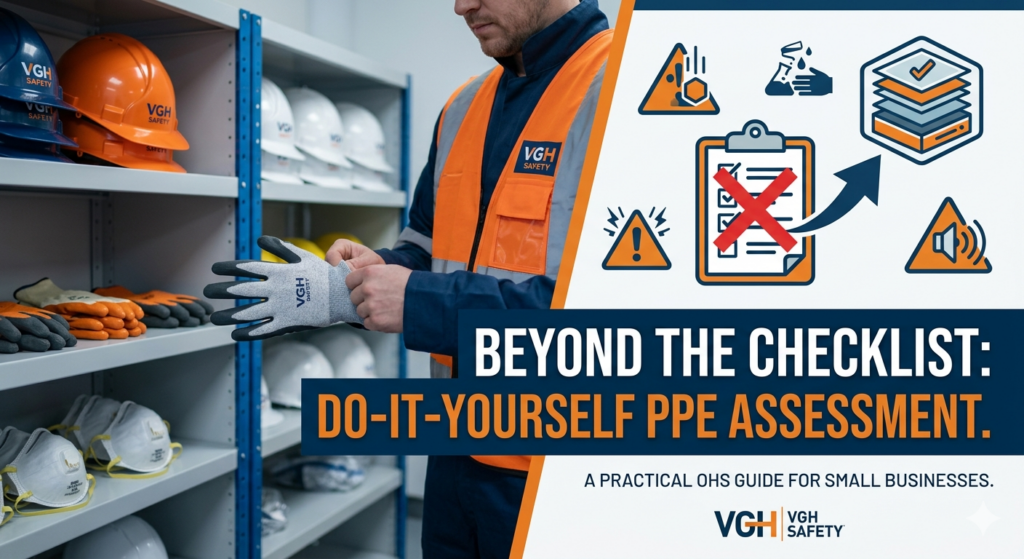
In the fast-paced world of South African business, there is a recurring trap that many owners fall into: The “Pretty Website Lie.” It’s the belief that as long as your employees look the part in brand-new uniforms and hard hats, you are compliant and safe.
But safety is not about aesthetics. It is a technical architecture of risk mitigation. Under the Occupational Health and Safety (OHS) Act, providing PPE is not a “check-the-box” activity—it is a legal obligation based on actual workplace hazards. If you aren’t conducting a proper assessment, you aren’t just risking fines; you’re risking your team’s lives.
If you don’t have a full-time safety officer, you can still maintain robust compliance. Here is your DIY framework for conducting a PPE needs assessment that actually works.
1. Identify the Task, Then the Risk
Before you buy a single item, look at what your team is actually doing. A safety assessment must be activity-specific.
- Map the Tasks: List every job function, from the office admin to the site foreman.
- Identify Hazards: For each task, identify what could cause harm. Is it falling debris? Chemical splashes? Excessive noise? High-voltage electrical work?
- The Hierarchy of Control: Remember, the OHS Act requires you to eliminate risks or control them at the source before relying on PPE. PPE is your final line of defence, not the first.
2. Match Gear to the Hazard
Once you know the risks, you must select the right equipment. This is where many businesses fail by purchasing “one-size-fits-all” gear that isn’t fit for purpose.
- Check the SANS/SABS Standards: In South Africa, quality is non-negotiable. Look for the SABS mark or NRCS approval on items like safety boots, respirators, and hard hats.
- Environment Matters: A standard glove might be cut-resistant but useless against chemical exposure. Understand the limitations of your gear. If you are unsure, consult a technical expert rather than guessing based on price.
3. The Quality Gap: Why Cheap PPE is a Liability
We often see businesses try to cut costs by buying uncertified, budget-friendly equipment. However, in an industrial or construction setting, uncertified PPE is effectively a liability waiting to happen.
Certified, high-quality gear is designed to perform under pressure. If a piece of PPE fails during an incident, your “cost-saving” exercise suddenly becomes a massive legal and financial burden. Protecting your employees with reliable, compliant gear is the most cost-effective insurance policy your business can have.
4. Implement, Train, and Maintain
Providing the gear is only the beginning. Compliance requires proof of implementation:
- Training: You must train your employees on why they wear the gear, how to wear it properly, and when to replace it.
- Maintenance: PPE requires inspection. Create a simple register to track when equipment was issued and when it is due for replacement. If a hard hat is cracked or a respirator filter is clogged, it is no longer PPE—it is a hazard.
Need a Partner in Compliance?
Navigating the complexities of the OHS Act shouldn’t feel like a guessing game. At VGH Safety, we believe that safety systems should be accessible, professional, and—above all—effective.
We don’t just supply high-quality, certified gear; we help you build a safety culture that protects your team and your business reputation.
Not sure which gear your site needs? Our experts can help you build Tailored Safety Packages that align with your specific workplace hazards.
Get a Quote and Start Your Compliance Journey Today