
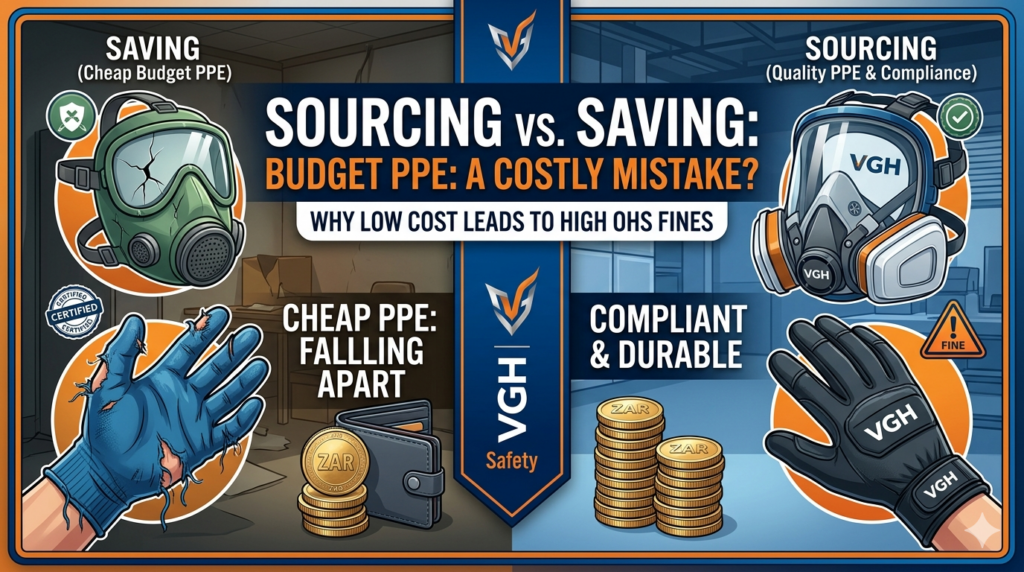
In the industrial sector, procurement often falls into the trap of prioritizing the lowest upfront price. It is tempting to view Personal Protective Equipment (PPE) as a commoditized expense—a line item to be reduced at every opportunity. However, from a technical and regulatory perspective, this approach is fundamentally flawed.
Choosing “budget” gear over professional-grade alternatives isn’t just a false economy; it is a direct invitation to operational failure and regulatory scrutiny.
1. The Hidden Costs of Failure
When a piece of PPE fails, the consequences ripple through your entire operation. A low-grade respirator that lacks a proper seal or a pair of gloves that tears under moderate stress does more than just compromise the user’s safety—it initiates a series of “hidden” costs:
- Production Stoppages: If gear fails, work stops. Replacing compromised equipment on the fly, or dealing with the aftermath of an injury, creates costly downtime that far outweighs the few Rand saved during initial procurement.
- Medical and Liability Expenses: The cost of an injury—including potential medical bills and lost man-hours—can cripple an SME’s budget.
- OHS Regulatory Penalties: If an incident occurs and the investigation reveals that the equipment provided was not fit for purpose or lacked proper certification, your business faces severe fines and potential legal action under the OHS Act.
2. Compliance as a Currency
In modern safety management, compliance is not a hurdle; it is a currency. Certified high-quality, certified gear acts as an asset that protects your business from risk.
When you invest in equipment that meets the required safety standards, you are purchasing more than just materials—you are purchasing documentation, provenance, and legal peace of mind. Conversely, uncertified equipment is a liability that provides no protection against regulatory failure. In the eyes of an auditor, the difference between “compliant” and “non-compliant” often comes down to the technical specifications of the gear your team is wearing.
3. The Lifetime Value Calculation
To move away from the “Pretty Website Lie” of cheap marketing, one must adopt a mathematical approach to procurement. Consider the Total Cost of Ownership (TCO).
High-quality equipment is engineered for durability, extended lifecycles, and superior performance under harsh industrial conditions. While a budget item might be 20% cheaper at the till, it may require replacement three times as often as a premium counterpart. When you factor in the labour costs of constant re-issue, the risk of failure, and the potential for regulatory fines, the “budget” option becomes significantly more expensive over time.
Investing in built-to-last safety solutions is a strategic decision that stabilizes your operational budget and strengthens your safety architecture.
Elevate Your Procurement Strategy
Safety is an investment in your company’s long-term viability. It is time to stop viewing PPE as a disposable cost and start managing it as a critical technical component of your business.
If you are ready to move away from the risks of “bargain-bin” shopping and implement a professional safety standard, our team is here to help. Consult with our procurement team today to evaluate your current setup and ensure your team is equipped with the quality and compliance they deserve.