In the industrial sector, the most dangerous misconception is the “fit and forget” approach to Personal Protective Equipment (PPE). Many site managers operate under the fallacy that once gear is issued, the safety duty is fulfilled. However, from a technical perspective, PPE is an asset that requires active management.
High-quality gear is engineered for durability, but even the best equipment will fail if it is subjected to improper handling, poor hygiene, or environmental degradation. If you want to maximize your ROI and ensure genuine OHS compliance, you must implement a structured maintenance protocol.
1. The “Maintenance-Free” Myth
PPE is not a “fit and forget” commodity. Every piece of equipment, from head protection to specialized respiratory gear, has a designed operational lifecycle. Factors such as UV exposure, humidity, chemical saturation, and daily mechanical stress begin to degrade material properties from the moment of first use. Treating PPE as indestructible is a failure in your safety architecture; it leads to silent failures where gear looks intact but has lost its protective capacity.
2. The 3-Pillar Maintenance Framework
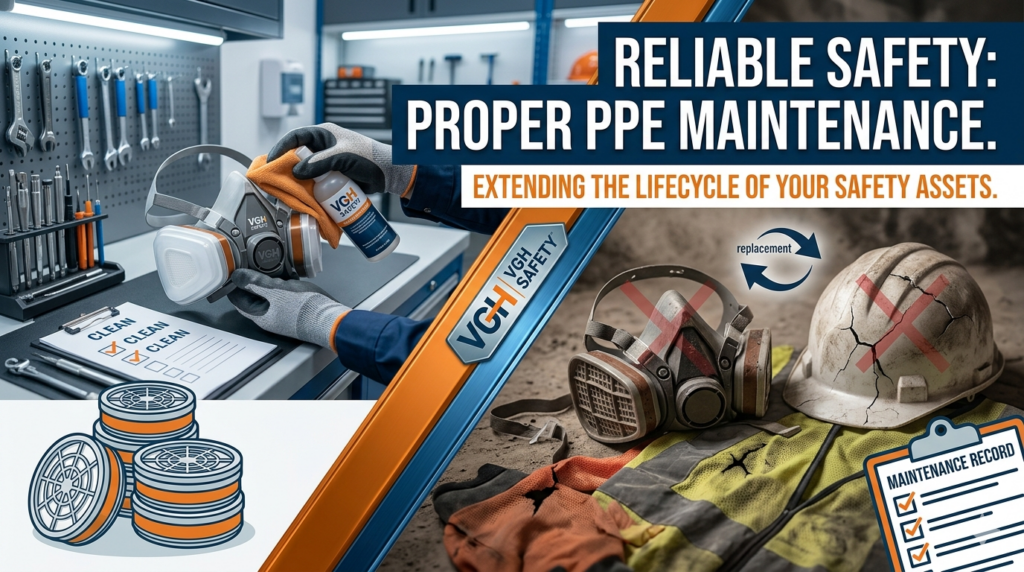
To extend the lifecycle of your safety assets, implement these three pillars of maintenance:
- Cleaning: Never use harsh industrial solvents or degreasers on sensitive PPE unless specified by the manufacturer. Use manufacturer-approved sanitizing solutions to clean gear, as improper chemicals can compromise the molecular integrity of plastics and synthetic fabrics.
- Inspection: Shift from reactive to proactive inspection. Regularly check for signs of elastic fatigue in straps, stress fractures in hard-shell materials, and seal degradation on respirator filter cartridges. A proactive audit catches failure before it becomes an incident.
- Storage: Environmental conditions are the silent killers of PPE. Store equipment in clean, dry, and climate-controlled areas. Avoid leaving high-visibility vests or plastic safety components in direct sunlight, as UV radiation causes rapid material brittleness and fading.
3. The Financial Impact
Implementing a structured maintenance schedule is a core component of safety asset management. When you extend the usable life of your equipment through disciplined care, you reduce the frequency of re-procurement. This creates financial breathing room, allowing you to reallocate budget toward higher-level safety infrastructure rather than replacing avoidable “disposable” losses.
Proactive Asset Protection
Safety is not a static purchase; it is a dynamic process. If your team is not currently documenting the maintenance of their equipment, your safety system is incomplete.
At VGH Safety, we assist industrial partners in moving from reactive equipment replacement to a sophisticated lifecycle management model. Whether you need to source durable, high-performance respirator filter cartridges or help in building a long-term safety asset management strategy, we provide the technical support required to keep your team protected.
Ready to optimize your safety inventory? Do not wait for gear failure to dictate your budget. Reach out for a protocol consultation to ensure your equipment is as resilient as your business.