
In the industrial sector, hand injuries are among the most frequent and costly operational setbacks. Yet, a technical audit of incidents reveals a stark reality: the majority of these hand injuries occur because the worker was wearing the wrong type of glove, rather than no glove at all.
Moving away from the “Pretty Website Lie” of generic supply, effective hand protection requires a precise match between the material properties of the glove and the specific technical demands of the task. Relying on a “one-size-fits-all” fabric glove is not a safety strategy; it is a critical vulnerability in your operational architecture.
1. Decoding Glove Standards
Understanding the technical specifications of protective gear is essential for building a resilient safety system. You must become familiar with established performance standards to make informed procurement decisions. For mechanical tasks, always check for standardized cut resistance levels, which quantify the glove’s ability to withstand sharp objects. For chemical work, you must look beyond basic waterproofing and identify the specific permeation breakthrough times for the hazardous substances your team handles. These standards are not mere legal filler; they are the technical benchmarks that guarantee operational trust.
2. The Quick-Reference Selection Guide
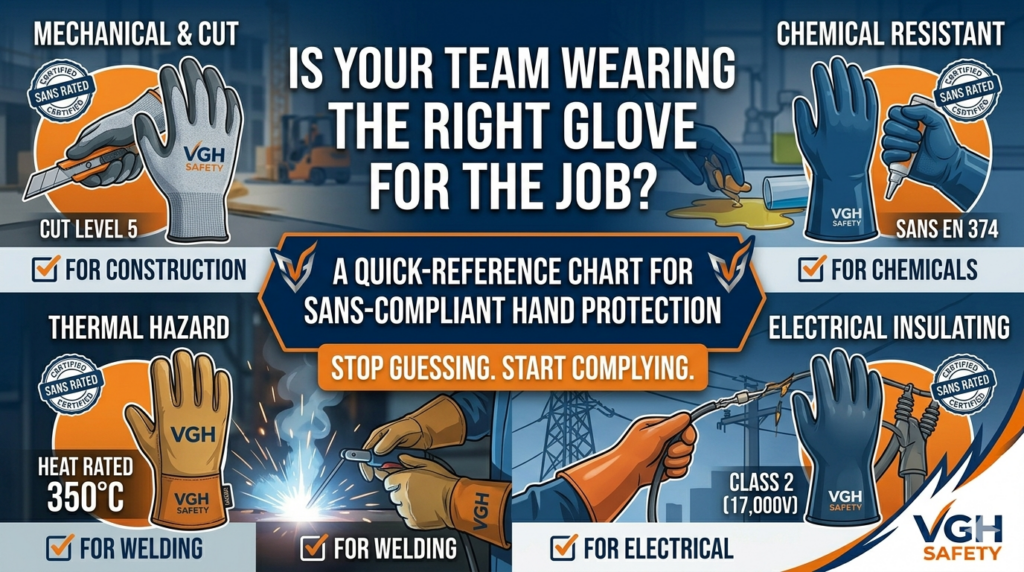
Use this ‘If/Then’ reference framework to move beyond generic purchasing and map your hand protection directly to operational risk:
- Mechanical Tasks (Abrasive/Cut Hazards):
- If the task involves: Material handling, construction, machinery operation, or handling sharp metal/glass.
- Then use: Gloves with certified cut resistance levels (e.g., HPPE or Aramid fiber liners), combined with abrasion-resistant palm coatings like nitrile or polyurethane for grip and durability.
- Chemical Handling (Permeation Resistance):
- If the task involves: Laboratory work, industrial cleaning, chemical decanting, or pesticide application.
- Then use: Specialised, non-porous gloves. Crucially, you must select the specific polymer material (e.g., Nitrile, Neoprene, PVC, or Butyl) that has proven resistance against the chemical being handled. Refer directly to the manufacturer’s chemical resistance chart—do not assume standard nitrile will protect against strong solvents.
- Thermal Hazards (Heat/Cold Resistance):
- If the task involves: Welding, foundries, hot pipe maintenance, cold storage, or outdoor work in winter.
- Then use: Insulated gloves specifically rated for the temperature range. Heat-resistant gloves utilize heavy-duty materials like leather or specialized fabrics to withstand contact, while cold-resistant gloves rely on thermal liners to prevent frostbite and maintain dexterity.
- Electrical Work (Insulating Properties):
- If the task involves: Working on or near energized circuits, high-voltage maintenance, or electrical installations.
- Then use: Insulating rubber gloves that are strictly rated for the specific voltage of the system. These gloves are critical life-saving devices and must be regularly tested and inspected for pinholes or degradation before every single use.
3. Moving Past Generic Supply
Safety is achieved through precise technical design, not cosmetic application. If your procurement protocol is based on the lowest price rather than a detailed hazard audit, you are operating with an unacceptable level of risk.
At VGH Safety, we specialize in helping industrial operators move past the inefficiencies of generic supply. We don’t just sell equipment; we help you integrate a high-authority hand protection system based on mathematical trust and technical architecture.
Is your current hand protection inventory genuinely optimized for safety and performance? Do not leave your team’s dexterity and safety to chance. Consult with our technical team today to schedule a comprehensive hand protection audit and ensure your team is equipped for the operational reality of their specific environment.